
Views: 0 Author: Site Editor Publish Time: 2026-08-10 Origin: Site


Industrial facilities face strict mandates for hazardous wastewater disposal. Liquid waste hauling costs drain operational budgets and expose plants to severe regulatory liabilities. Standard treatment methodologies usually stop at basic volume reduction. You run the effluent through primary filtration and basic evaporation. This removes a portion of the water but leaves behind a highly toxic, viscous concentrated brine known as the mother liquid. Managing this residual fluid is a logistical nightmare. Achieving true Zero Liquid Discharge (ZLD) requires pushing past this specific bottleneck. Modern systems must hit two distinct targets: recover high-purity distillate for immediate plant reuse and reduce the remaining hazardous waste into a dry, compliant solid. You cannot achieve this with standard crystallizers. The most reliable approach integrates advanced thermal technologies. You combine an MVR Evaporator for primary concentration with a dedicated Mother-liquid Dry System. By finishing the process with a Vacuum Dryer for ZLD, you convert stubborn liquid waste into a manageable solid cake, closing the loop on environmental compliance.
Table of Contents
Holistic Architecture is Mandatory: A successful ZLD process is a series of physical, chemical, and thermal technologies; upstream pretreatment and membrane filtration must be perfectly calibrated to protect downstream thermal assets.
True ZLD Requires Specialized Final-Stage Drying: Standard crystallizers often fail when handling highly viscous, complex hazardous brines; a dedicated mother-liquid dry system is required for the final liquid-to-solid phase.
OPEX Optimization via MVR: Mechanical Vapor Recompression (MVR) evaporators drastically reduce the energy footprint of the initial concentration phase compared to traditional multi-effect evaporators.
Low-Temperature Safety: Utilizing a vacuum dryer for ZLD ensures that heat-sensitive or highly volatile hazardous compounds are dried safely at lower temperatures, preventing secondary pollution or equipment degradation.
System Synergy Dictates ROI: The financial viability of a ZLD project depends on the seamless integration of upstream pretreatment, MVR concentration, and final vacuum drying to minimize downtime and maintenance costs.
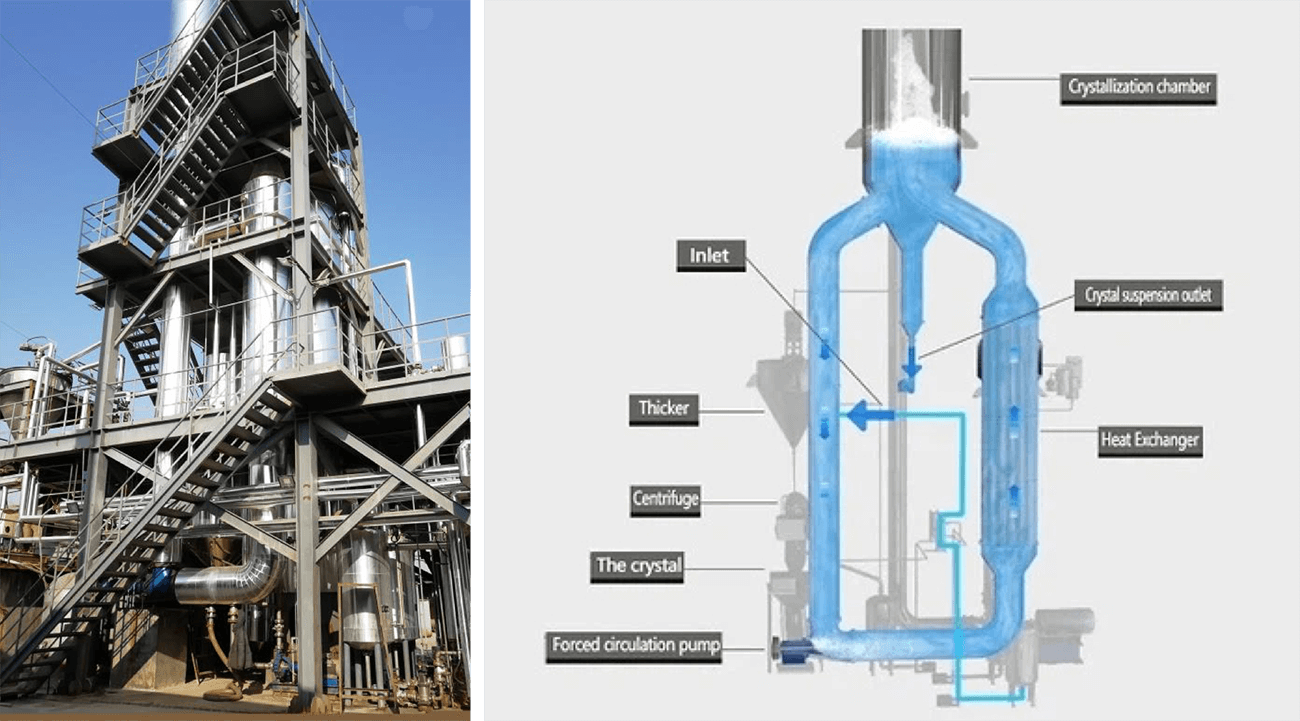
You cannot design a functional thermal system without knowing exactly what is in the water. A comprehensive analysis of the wastewater profile is the mandatory first step. Engineers must evaluate the exact chemical composition of the effluent before sizing any equipment. This includes precise measurements of Total Dissolved Solids (TDS), organic load (COD/BOD), heavy metal concentrations, and pH levels. Skipping this analytical phase guarantees equipment failure downstream. The thermal dynamics of evaporation depend entirely on the boiling point elevation and viscosity curves of your specific fluid.
Variations in the waste stream dictate the exact selection of physical, chemical, and thermal technologies. High organic loads require advanced oxidation processes before thermal treatment begins. Elevated concentrations of specific heavy metals necessitate targeted chemical precipitation. The analytical data gathered during this phase forms your operational baseline. It determines the metallurgy of the evaporators, the sizing of the compressors, and the specific mechanical configuration of the drying units.
Wastewater Parameter | Typical High-Risk Range | Impact on Thermal Systems | Required Pretreatment Action |
|---|---|---|---|
Total Dissolved Solids (TDS) | 30,000 - 80,000 mg/L | Increases boiling point elevation; drives up compressor energy demand. | Primary concentration via Reverse Osmosis (RO) or Ultrafiltration (UF). |
Hardness (Calcium/Magnesium) | > 500 mg/L | Causes severe, rapid scaling on heat exchanger tubes, destroying efficiency. | Lime-soda ash softening or targeted ion exchange resins. |
Organics (COD) | > 5,000 mg/L | Induces massive foaming events and volatile emissions during evaporation. | Advanced oxidation processes (AOP) or activated carbon filtration. |
pH Levels | < 4.0 or > 10.0 | Triggers aggressive pitting and stress corrosion cracking in standard metals. | Automated neutralization dosing to maintain a neutral baseline. |
Physical and chemical pretreatment dictates system longevity. Operators must remove suspended solids through coagulation, flocculation, and clarification. Adjusting pH levels accurately prevents acidic corrosion and alkaline scaling. Chemical softening is an absolute necessity in hazardous wastewater applications. It protects downstream thermal equipment from severe mineral fouling. Calcium, magnesium, and silica ions will scale heat exchangers rapidly if left untreated. Once scale forms, heat transfer efficiency drops to zero within days, forcing you to shut down the plant for aggressive chemical cleaning.
Secondary treatment utilizes advanced membrane systems to handle initial volume reduction. Technologies like Ultrafiltration (UF) and Reverse Osmosis (RO) extract clean water efficiently before the brine becomes too concentrated. UF removes fine particulates and large macromolecules, protecting the delicate RO membranes from physical damage. The RO system then pushes the wastewater to its osmotic limits, recovering a significant percentage of clean permeate. This secondary phase drastically reduces the hydraulic load on the downstream thermal equipment, optimizing the overall energy consumption of the facility.
Membrane systems face strict osmotic pressure limits in hazardous waste applications. Reverse Osmosis and Ultrafiltration cannot process liquids beyond a certain concentration threshold. This limit typically sits around 60,000 to 80,000 mg/L TDS, depending on the specific membrane technology and pump configuration. Pushing membranes beyond this limit causes irreversible fouling and mechanical rupture. This fundamental limitation forces the transition to thermal technologies for further concentration.
The byproduct left after primary thermal concentration is the mother liquid. This fluid represents the ultimate bottleneck in zero liquid discharge operations. It is highly concentrated, extremely corrosive, and possesses a viscosity similar to heavy syrup or wet concrete. Transporting and disposing of this liquid hazardous waste carries immense financial and legal liabilities. Regulatory bodies mandate strict tracking manifests and heavily penalize improper liquid disposal. Converting this hazardous slurry into a dry solid waste presents a significantly lower liability. Dry solids are exponentially cheaper to transport and manage.
A successful ZLD implementation requires meeting strict operational baselines that go beyond basic evaporation. The system must operate continuously without suffering from severe scaling or requiring daily manual intervention. It must maximize the recovery of treated water, ensuring the condensate meets the purity standards required for cooling towers or boiler feed water. Every drop recovered reduces the facility's reliance on municipal water supplies and lowers raw water intake costs.
Operators need to minimize energy consumption per ton of water evaporated. Thermal processes are inherently energy-intensive. Efficiency dictates the financial viability of the entire project. Finally, the system must produce a final solid output that meets local landfill or recovery mandates. The solid cake must pass standard paint filter tests and exhibit moisture levels low enough to prevent leaching. Achieving these criteria demands precise integration across all physical, chemical, and thermal treatment phases.
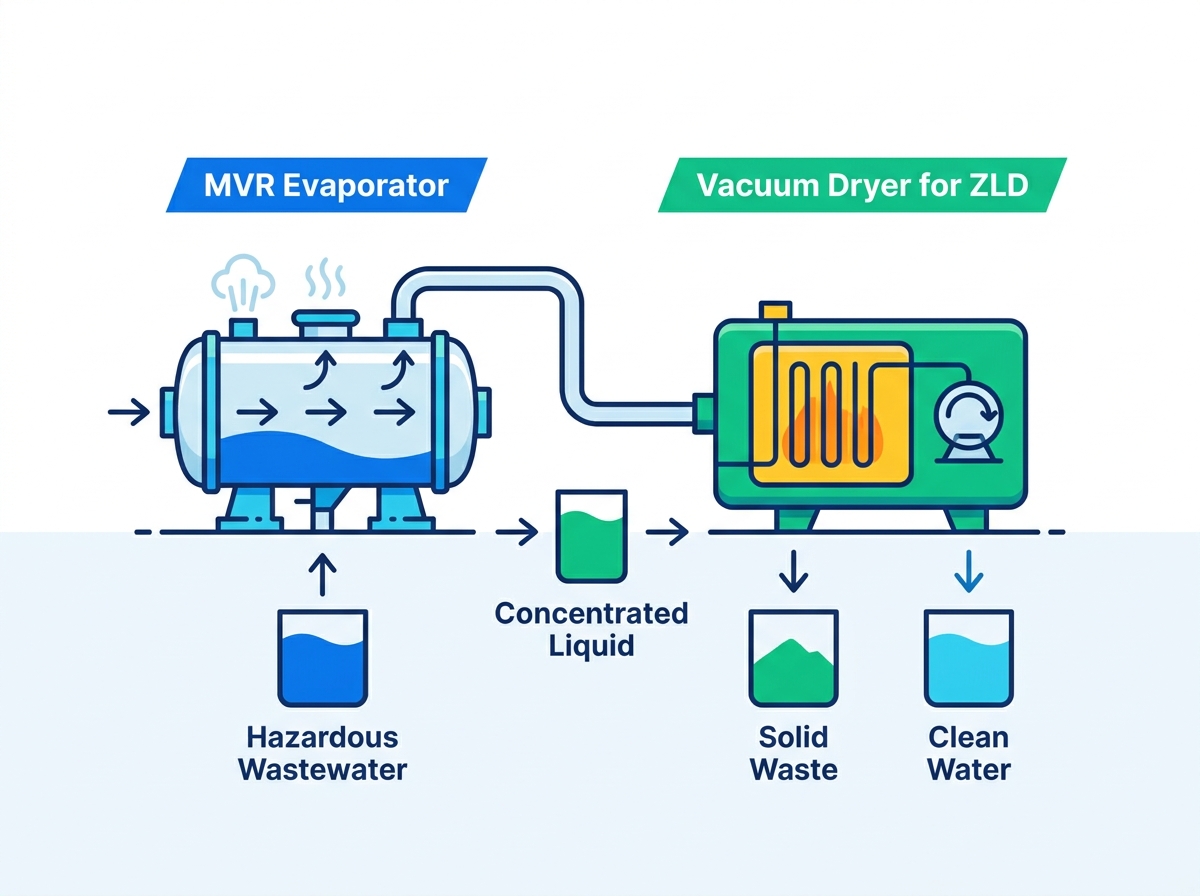
An MVR Evaporator functions as the primary brine concentrator in modern facilities. The system operates by recycling secondary steam generated during the evaporation process. A mechanical compressor compresses this vapor, raising its pressure and temperature. This upgraded steam is then directed back into the heat exchanger to heat the incoming wastewater. This continuous recycling loop eliminates the need for continuous fresh steam injection from an external boiler, drastically cutting thermal energy demands.
Hazardous waste applications require specific design adaptations to handle complex fluid dynamics. Falling film or forced circulation designs are strictly necessary. Falling film evaporators distribute the liquid evenly across the inner walls of the heating tubes, creating a thin, highly efficient heat transfer layer. Forced circulation systems utilize massive axial flow pumps to maintain high tube velocities. This rapid movement prevents supersaturation at the tube wall, effectively stopping premature crystallization and scaling on the heat transfer surfaces.
The operational sequence for a standard MVR concentration phase follows a strict mechanical path:
The feed pump introduces chemically softened, pretreated brine into the primary heat exchanger network.
Massive recirculation pumps drive the fluid through the tubes at high velocities to prevent wall scaling and localized boiling.
As water evaporates, the mechanical compressor draws in the secondary vapor, increasing its pressure and latent heat.
The compressor discharges the upgraded steam back into the shell side of the heat exchanger, transferring heat to the incoming feed.
Clean condensate is extracted for plant reuse, while the highly concentrated slurry is discharged to the drying phase.
Metallurgy is a critical aspect when processing high-chloride or highly acidic hazardous streams. Standard carbon steel or basic 304 stainless steel will fail within weeks under these aggressive conditions. Engineers must specify premium materials such as Titanium, Duplex Stainless Steel (like 2205 or 2507), or high-nickel alloys like Hastelloy. High chloride environments, especially at elevated boiling temperatures, demand Titanium grades to prevent pitting, crevice corrosion, and stress corrosion cracking.
The cost-benefit analysis heavily favors premium materials despite the initial capital outlay. Higher initial capital expenditure prevents catastrophic operational failures. Premature equipment failure leads to massive production downtime, hazardous chemical spills, and costly emergency replacements. Investing in the correct metallurgy ensures the evaporator vessel and heat exchanger tubes survive the harsh chemical realities of concentrated mother liquid for decades.
Standard crystallizers struggle significantly with mixed-salt, high-viscosity hazardous waste. Traditional crystallization relies on predictable solubility curves and uniform crystal growth. Hazardous wastewater contains a chaotic mix of organic compounds, heavy metals, and competing inorganic salts. Operational realities include frequent blockages, inconsistent crystal formation, and massive foaming events. Mixed salts do not crystallize uniformly. They crash out of solution unpredictably.
These chaotic precipitation events form sticky, unmanageable sludges that foul heat exchangers and destroy pump seals. High maintenance demands plague traditional setups, requiring operators to manually hydro-blast tubes frequently. A dedicated Mother-liquid Dry System serves as the necessary intermediary or replacement. It handles complex hazardous applications where traditional crystallization fails entirely. It focuses on brute-force moisture removal rather than delicate crystal growth.
The concentrated slurry must be managed carefully after primary evaporation to prevent the system from seizing. Specialized positive displacement pumps, such as progressive cavity or rotary lobe pumps, transfer the thick fluid from the evaporator to the heated tank systems of the drying unit. Centrifugal pumps are useless here. They simply cavitate in the highly viscous sludge and burn out their motors.
Buffer tanks play a vital role in this transition phase. They maintain the fluid temperature and provide necessary surge capacity between the continuous evaporation process and the batch or semi-continuous drying process. Automated flow control prevents premature precipitation. Keeping the fluid moving and heated stops blockages in transfer piping. Seamless integration ensures continuous operation without requiring operators to manually clear clogged lines or adjust flow rates constantly.
A Vacuum Dryer for ZLD operates on fundamental physical principles to achieve total solidification. Lowering the atmospheric pressure inside the drying chamber directly reduces the boiling point of water. This allows for efficient, rapid drying at significantly lower temperatures compared to atmospheric dryers. Hazardous waste processing benefits immensely from this low-temperature approach. It fundamentally changes the safety profile of the operation.
Low-temperature drying prevents the thermal degradation of sensitive organics present in the sludge. High heat can cause these organics to crack, producing foul odors or toxic byproducts. Operating under a vacuum mitigates the risk of volatile emissions escaping into the atmosphere, as all vapors are contained and condensed. It reduces thermal stress on the mechanical components of the dryer, extending the lifespan of seals, bearings, and structural welds.
Hazardous sludge will bake onto heat transfer surfaces without proper mechanical action, creating an insulating layer that stops the drying process entirely. Vacuum dryers utilize aggressive internal agitation or scraping mechanisms. Ribbon blenders, paddle agitators, or specialized scraper blades continuously turn and shear the sludge. These continuous movements keep the heat transfer surfaces clean and expose new surface area to the vacuum, maximizing evaporation rates.
The process yields dual final outputs that define ZLD success. First, the system recovers the last remaining vapor, passing it through a chilled condenser to produce clean liquid condensate. This water is routed back to the facility. Second, the dryer produces a dry, manageable solid cake or flowable powder. This dry material qualifies for lower-cost solid waste disposal. In certain industrial applications, this solid output can even be routed for targeted chemical recovery, turning a waste liability into a potential asset.
The energy footprint of an integrated MVR and vacuum drying system is remarkably low when compared to legacy technologies. It outperforms conventional thermal evaporation and atmospheric drying methods by a wide margin. Mechanical vapor recompression utilizes electrical energy to drive the compressor, drastically cutting the massive thermal energy demands associated with steam boilers. The vacuum dryer uses minimal jacket heating, relying instead on pressure reduction to drive evaporation.
Calculating the payback period requires a clear, comprehensive framework. Facilities must weigh the drastically reduced liquid disposal costs against the electrical consumption of the compressors and vacuum pumps. The value of recovered water for plant reuse also accelerates the return on investment. When disposal costs for liquid hazardous waste exceed hundreds of dollars per ton, the OPEX savings generated by a highly efficient ZLD system often result in a rapid payback period.
Physical footprint requirements dictate system selection in many crowded industrial plants. Integrated thermal systems offer compact, vertical footprints compared to massive solar evaporation ponds or sprawling multi-effect evaporator trains. Engineers design these modern systems to maximize vertical space, utilizing compact heat exchangers and skid-mounted compressor units.
Modular designs provide distinct advantages for growing facilities. Operators can scale capacity seamlessly as production increases. Adding parallel MVR units or upgrading the drying module accommodates higher flow rates without requiring a complete system redesign. This modularity allows plants to phase their capital investments, matching their wastewater treatment capacity directly to their current production output.
Advanced PLC and SCADA systems are mandatory for modern ZLD operations. These control systems monitor critical parameters continuously, far beyond the capability of human operators. They track boiling point elevation, compressor vibration, motor amperage, and dryer moisture levels in real-time. Automated valves adjust feed rates and steam pressures instantly to maintain thermodynamic equilibrium.
Automation reduces daily manual labor significantly, eliminating the need for operators to turn valves manually or take hourly fluid samples. Highly trained operators are still required to manage these systems. They must handle complex troubleshooting, interpret historical data trends, and perform specialized mechanical maintenance tasks. The role shifts from manual labor to advanced process supervision.
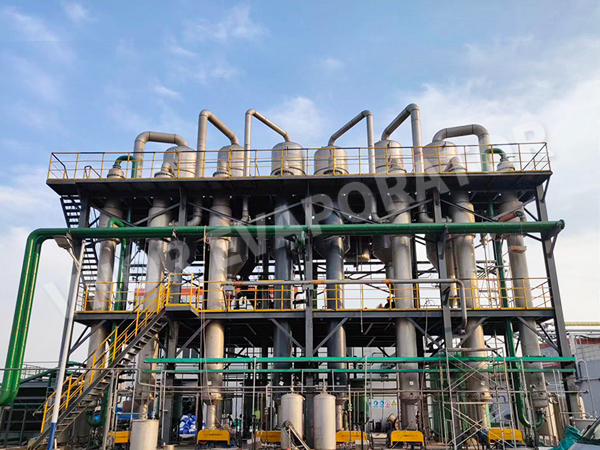
Scaling is an inevitable reality in all thermal ZLD systems, regardless of the technology used. Dissolved solids will eventually precipitate onto heat transfer surfaces as the fluid concentrates. Mitigation strategies must be aggressive, proactive, and built into the daily operational schedule. Rigorous upstream chemical softening removes the bulk of scale-forming ions before they ever reach the evaporator.
Optimized flow velocities keep suspended solids moving through the tubes, preventing them from settling and baking onto the metal. Aggressive, scheduled Cleaning-in-Place (CIP) protocols are essential. Operators utilize automated sequences of acid and caustic washes. These chemical washes dissolve mineral scales and break down organic fouling before they cause permanent blockages, restoring heat transfer efficiency to baseline levels.
The mechanical compressor is the heart of the MVR system. It drives the entire thermodynamic cycle. It is also the single point of failure; if the compressor goes down, the entire ZLD process stops. Protecting this highly engineered component is paramount. Droplet separators, or demisters, are critical safety features installed before the compressor inlet.
These separators prevent corrosive liquid carryover from reaching the high-speed compressor blades. Even microscopic droplets of concentrated hazardous brine can cause severe pitting and catastrophic imbalance at high RPMs. Regular vibration monitoring and oil analysis predict bearing failures before they occur. Strict, uncompromising maintenance schedules ensure the compressor delivers years of reliable service under harsh industrial conditions.
Execute a comprehensive wastewater characterization study to map all contaminants, physical properties, and scaling potentials accurately before sizing equipment.
Run pilot-scale treatability tests to validate thermal dynamics and drying characteristics, ensuring the selected technology can handle your specific mother liquid.
Specify premium metallurgy for all wetted parts to prevent catastrophic corrosion failures during high-temperature hazardous waste processing.
Implement aggressive upstream chemical softening protocols immediately to protect downstream heat exchangers from rapid mineral fouling.
Establish a proactive maintenance and CIP schedule focused heavily on compressor protection, vibration monitoring, and heat exchanger efficiency.
With a focus on energy saving, environmental protection, and resource utilization, VNOR develops and manufactures evaporation and crystallization systems for wastewater treatment, pharmaceutical, and chemical applications. Its project support covers system design, fabrication, installation, commissioning, and after-sales service.
A: A properly designed ZLD system produces two distinct outputs. The first is high-purity treated water, recovered as condensate, which is suitable for immediate facility reuse in cooling towers or boilers. The second is a dry, manageable solid waste cake or powder. This solid output is ready for compliant landfill disposal or targeted chemical recovery.
A: An MVR system uses a mechanical compressor to recycle secondary steam, utilizing electrical energy to drive the evaporation process. It does not require continuous fresh steam injection. A traditional multi-effect evaporator relies heavily on a continuous, massive supply of fresh steam from an external boiler for each successive effect.
A: The mother liquid left after primary evaporation is highly viscous and heavily concentrated. Standard crystallizers rely on uniform crystal growth, which fails in complex, mixed-salt brines. They suffer from frequent blockages, severe fouling, and foaming. A dedicated drying system handles these extreme viscosities through brute-force mechanical agitation.
A: Operating under a vacuum lowers the atmospheric pressure inside the chamber, which proportionally reduces the boiling point of water. This allows the system to dry hazardous sludge at much lower temperatures. It prevents the thermal degradation of sensitive organics and mitigates the dangerous release of volatile emissions.
A: Chemical softening removes scale-forming ions, primarily calcium, magnesium, and silica, from the wastewater. If left untreated, these minerals will rapidly precipitate onto the heat exchanger tubes during evaporation. This scaling drastically reduces heat transfer efficiency and leads to severe equipment blockages and costly downtime.

