
Views: 0 Author: Site Editor Publish Time: 2026-11-23 Origin: Site


The wiped film evaporator working principle is based on spreading liquid feed into a thin, continuously renewed film across a heated surface using a rotating wiper system. This design is particularly useful for processing heat-sensitive materials, high-viscosity liquids, and high-boiling-point compounds that require controlled thermal exposure. Combined with vacuum operation, efficient jacket heating, and a suitable rotor configuration, a wiped film evaporator helps reduce product residence time, improve heat transfer, and limit thermal degradation. Understanding how these components work together allows engineers and plant operators to evaluate equipment suitability for pharmaceutical intermediates, polymers, botanical extracts, and other demanding industrial applications.
Mechanics of Preservation: The wiped film evaporator working principle relies on mechanically spreading fluid into a highly turbulent, extremely thin film against a heated surface, reducing residence time to mere seconds.
Rotor Design Dictates Performance: Selecting the correct rotor configuration (fixed clearance, centrifugal, or spring-loaded wipers) is the primary variable in managing material viscosity, controlling residence time, and ensuring continuous heat transfer surface wetting.
Vacuum Integration is Mandatory: Operating under reduced pressure lowers the boiling temperature of the feed material, helping protect heat-sensitive compounds from excessive thermal exposure.
Table of Contents
The primary objective of any thermal separation process for sensitive materials is maximizing evaporation efficiency while minimizing thermal stress. Achieving this requires precise control over fluid dynamics and thermodynamics. We see many facilities struggle with product degradation because they rely on outdated kettle systems. Upgrading to thin-film technology changes the entire thermal profile of the process.
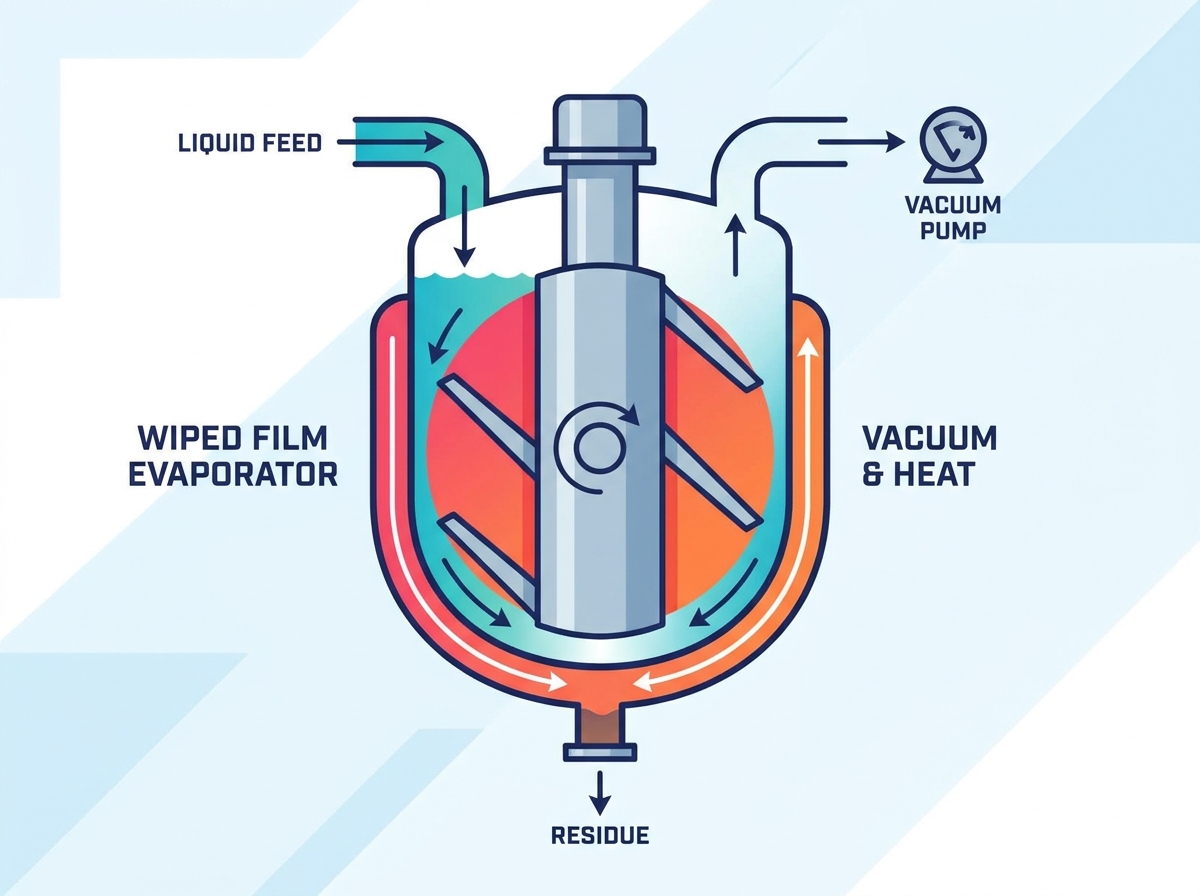
Liquid feed enters the evaporator above the heating jacket. It distributes initially via a distributor ring. This ring ensures an even flow of material onto the inner wall. Rotor blades immediately engage the liquid. They mechanically spread it into a turbulent thin film. The resulting film is typically thin and continuously renewed, with its thickness depending on the rotor design, operating speed, feed rate, and material properties. Specific film thickness should be confirmed through equipment design data or process testing. Mechanical wiping maximizes the surface area-to-volume ratio. This physical action facilitates rapid heat transfer. The rotor generates a bow wave ahead of each blade. This creates intense localized mixing. This mixing constantly renews the fluid boundary layer. It prevents localized overheating and eliminates dead zones where material might stagnate. In field operations, maintaining this bow wave is what keeps the heat transfer coefficient high. If the feed rate drops too low, the bow wave collapses, leading to dry spots.
Heating media apply directly to the external jacket. Common media include thermal fluid, steam, or pressurized hot water. The jacket provides the precise latent heat required for rapid vaporization across the thin film. Because the film is extremely thin, thermal resistance remains minimal. Heat transfers instantly from the jacket wall into the fluid. This rapid energy transfer is a cornerstone of the wiped film evaporator. Evaporation happens almost instantaneously upon contact. Plant operators must monitor jacket temperatures closely. A deviation of just a few degrees can shift the evaporation rate significantly. We typically install multi-zone heating jackets for complex mixtures. This allows operators to profile the temperature along the length of the evaporator body.
Evaporated vapors route either counter-current or co-current relative to the liquid flow. Counter-current designs send vapors upward while the heavy residue flows downward. Co-current designs move both phases in the same direction. Mechanical entrainment separators perform a specific function in the vapor path. They prevent unevaporated liquid droplets or foam from carrying over into the condenser. This separation keeps the distillate stream free from contamination. It ensures high product purity. We often see foaming issues with botanical extracts. Properly designed entrainment separators mitigate this risk entirely. They use centrifugal force or impingement plates to knock down liquid droplets before they escape the evaporation zone.
System pressure and boiling point share a direct thermodynamic relationship. Lowering the system pressure reduces the temperature at which the liquid's vapor pressure reaches the surrounding pressure, allowing evaporation to occur at a lower temperature. Integrating deep vacuum systems allows evaporation to occur at temperatures significantly below the material's standard boiling point. Short-path setups often reach down to 0.001 mbar. Operating under these deep vacuum conditions protects fragile molecules from thermal cracking or oxidation. Maintaining such deep vacuum requires robust dynamic seals. We use double mechanical seals with barrier fluids to prevent atmospheric leaks. Even a microscopic leak can ruin a batch of high-value pharmaceutical intermediates.
Residence time in these systems typically ranges from 1 to 10 seconds. Batch reactors or standard distillation columns require extended residence times. They often hold materials at elevated temperatures for hours. The brief exposure in wiped film systems directly preserves the molecular integrity of heat-sensitive liquids. By limiting the time the product spends at the evaporation temperature, degradation reactions simply do not have time to occur. This is why we specify this equipment for omega-3 fatty acids and delicate polymers. The thermal history of the product remains incredibly short.
The internal rotor is the defining component of the system. You must match its design to the specific rheology of the feed material to maintain process stability. Using the wrong rotor type guarantees poor yield and frequent maintenance shutdowns.
Fixed clearance rotors maintain a defined gap between the rotor elements and the heated wall rather than relying on continuous mechanical contact. The rotating elements help distribute the feed and maintain film movement through hydrodynamic action. These designs can be suitable for relatively clean, low-viscosity materials with limited fouling tendencies, depending on the equipment geometry and process conditions.
Centrifugal and spring-loaded wipers are designed to maintain closer contact with the heated wall. Centrifugal wipers use rotational force to move the blades outward, while spring-loaded designs use mechanical spring pressure. These configurations can help maintain film renewal and reduce material buildup when processing more viscous or fouling feeds. The appropriate design should also account for material shear sensitivity, particulate content, and blade wear requirements.
Rotor Type | Wall Contact Mechanism | Maximum Viscosity Handling | Primary Industrial Applications |
|---|---|---|---|
Fixed Clearance | None (Maintains 1-2mm gap) | Up to 1,000 cP | Clean fluids, bulk solvent recovery, non-fouling organics |
Centrifugal Wipers | Speed-dependent outward force | Up to 50,000 cP | Moderate fouling, fluctuating feed rates, food extracts |
Spring-Loaded Wipers | Constant mechanical pressure | Up to 100,000+ cP | Heavy residues, polymer melts, severe fouling slurries |
Hinged Blades | Pivot action based on fluid resistance | Up to 20,000 cP | Suspensions, slurries with solid particulates |
Tapered or conical rotor designs offer unique geometric advantages. The evaporator body and rotor feature a slight conical taper. Adjusting the rotor clearance axially in a tapered configuration allows operators to precisely control residence time. Moving the rotor up or down changes the gap between the blades and the wall. This ensures complete heat transfer surface wetting, even at extremely low throughput rates. We adjust this clearance during commissioning to dial in the exact film thickness required for the specific product. It provides a level of tuning impossible with straight-sided cylinders.
Selecting the right rotor requires analyzing the feed material under operating conditions. You cannot guess these parameters.
Analyze feed viscosity limits in centipoise (cP) at the target evaporation temperature.
Assess particulate content to avoid mechanical binding between the rotor and the wall.
Evaluate crystallization tendencies to prevent rotor seizure during heavy concentration.
Select spring-loaded wipers for materials with fluctuating viscosities or severe fouling potential.
Use fixed clearance rotors for clean, low-viscosity fluids to minimize mechanical wear.
Test the material's shear sensitivity to ensure the mechanical wiping does not degrade the product structure.
Assessing how the working principle translates to specific material processing challenges reveals the true utility of this technology. We deploy these systems across diverse industries to solve complex separation problems.
Channeling and dry spots pose major challenges in high-viscosity evaporation. When fluids become too thick, they resist flowing evenly over the heating surface. Continuous mechanical agitation overcomes high viscosity. The rotor blades force the viscous material into a thin layer. They maintain a turbulent film that constantly renews the boundary layer at the heat transfer surface. This mechanical wiping action is the only reliable method to evaporate highly viscous residues without burning them. In polymer processing, we see viscosities exceed 100,000 cP. Without active wiping, the material would simply insulate the wall and stop all heat transfer.
You can rapidly concentrate dilute solutions without inducing thermal damage. This applies to removing water or solvents from food products, proteins, or industrial effluents. The high heat transfer coefficients achieved by the turbulent thin film allow for massive evaporation rates in a compact footprint. This makes the system ideal for stripping bulk solvents before final purification steps. We frequently install these units upstream of crystallization processes. They remove the bulk of the solvent quickly, reducing the load on downstream equipment.
Different industries leverage this technology for specific separation challenges. The operational parameters shift drastically depending on the feed material.
Pharmaceuticals and Nutraceuticals: Focus on API concentration and solvent recovery. Active compounds remain intact without degradation due to the ultra-short residence time. We strictly control jacket temperatures to prevent any localized hot spots.
Polymers: Operators strip unreacted monomers and handle highly viscous polymer melts efficiently. The mechanical wipers easily manipulate the thick polymer chains. This allows volatile components to escape the matrix.
Botanical Extracts: Cannabis and hemp processing requires precise temperature and vacuum control. Operators separate light terpenes, valuable cannabinoids, and heavy waxes effectively. They achieve this without destroying the fragile molecular structures.
Petrochemicals: Refineries use these systems to separate heavy lube oils and waxes. The high operating temperatures require specialized thermal fluid heating systems and robust mechanical seals.
Food and Beverage: Facilities concentrate fruit juices and dairy products. The short residence time preserves delicate flavor profiles and prevents caramelization of natural sugars.
Evaluating vendor specifications against your operational requirements ensures you select the right equipment architecture. You must look beyond basic throughput numbers and examine the mechanical design details.
A standard unit utilizes an external condenser. Vapors must travel through a vapor pipe to reach the condensation surface. This travel creates a pressure drop. This limits the depth of vacuum the system can achieve. A short path unit utilizes an internal condenser located directly in the center of the evaporator body. This eliminates the vapor pipe pressure drop. In molecular distillation applications, the short distance between the evaporating surface and the internal condenser is designed to be comparable to or shorter than the molecular mean free path, minimizing intermolecular collisions during vapor transfer. This allows the system to achieve ultra-deep vacuum levels. We specify short path designs exclusively for high-boiling-point materials that require operating pressures below 1 mbar.
Thermal separation presents non-linear scaling challenges. You cannot simply double the surface area and expect double the throughput. Pilot testing is absolutely necessary. You must determine exact heat transfer coefficients, optimal rotor speeds, and vacuum requirements before sizing commercial-scale equipment. Testing validates the theoretical calculations. It uncovers unexpected rheological behaviors, such as shear-thickening or foaming. We always run a 50-liter pilot batch before finalizing the engineering design for a 1,000-liter-per-hour production system.
Construction materials provide required corrosion resistance and product purity. Selecting the wrong alloy leads to rapid equipment failure and product contamination.
Specify 316L Stainless Steel for standard sanitary applications and food processing.
Utilize Hastelloy or Titanium for processing aggressive chlorides or highly acidic streams.
Ensure cGMP compliance for pharmaceutical manufacturing, focusing on surface finish and cleanability.
Verify ASME certification for the heating jacket and pressure vessel components to ensure structural integrity.
Demand ATEX or C1D1 ratings for all electrical components when processing flammable solvents.
Select appropriate elastomer materials like Kalrez or Viton for O-rings based on chemical compatibility with the feed.
Falling Film Evaporators suit high-volume, low-viscosity, less sensitive materials. They rely on gravity to create the film, making them unsuitable for viscous fluids. Standard batch distillation works for robust compounds but fails with heat-sensitive organics due to prolonged heat exposure. Wiped film systems bridge the gap. They provide continuous processing for high-viscosity, thermally fragile mixtures that other technologies simply cannot handle. We often replace failing batch reactors with these continuous systems to instantly boost yield and product quality.
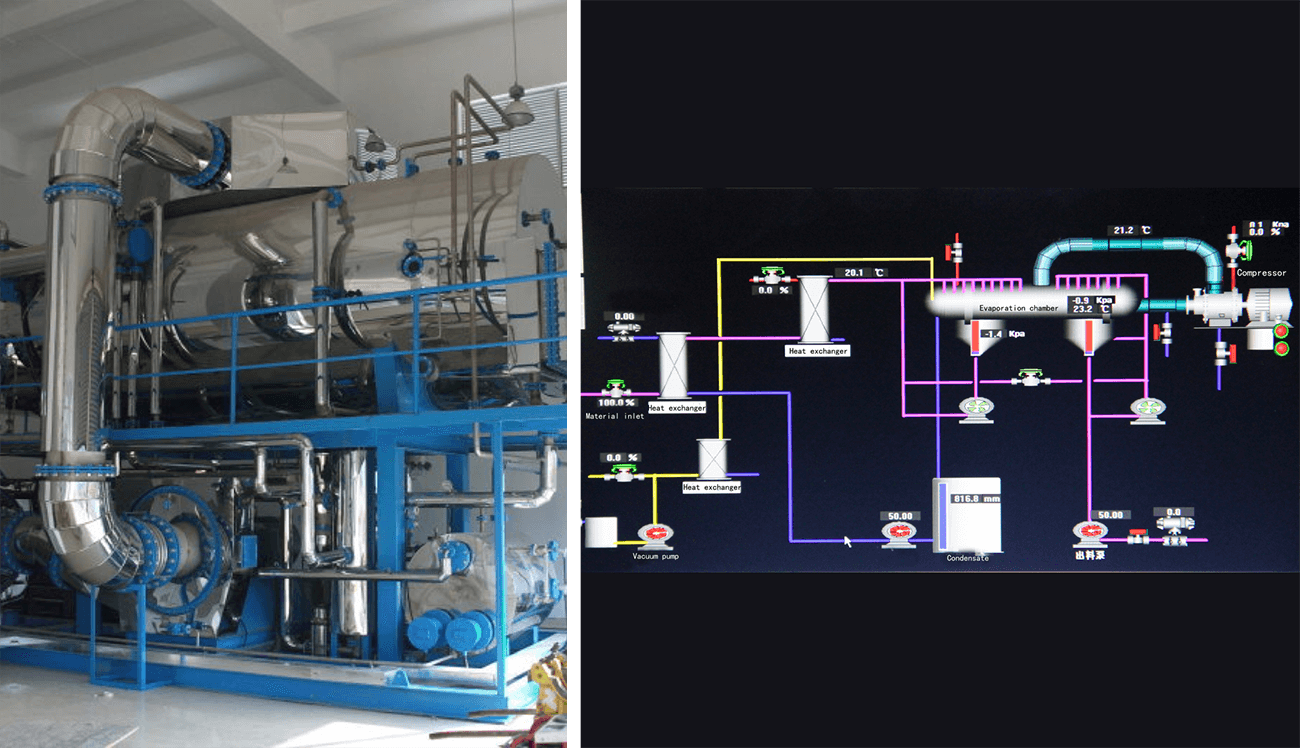
Acknowledging the operational complexities associated with this technology ensures long-term operational stability. These are high-performance machines that require skilled operation and rigorous maintenance.
Precision machining, dynamic seals, and complex vacuum systems require careful handling and specialized operator training. The tight tolerances between the rotor and the heated wall demand exact alignment during installation. Thermal expansion must be calculated accurately. This prevents the rotor from seizing against the wall at operating temperatures. We use laser alignment tools during installation to ensure the rotor shaft is perfectly plumb. Any deviation causes uneven wiper wear and potential mechanical failure.
Dynamic components experience mechanical wear and tear. Mechanical seals, lower guide bearings, and wiper blades require regular inspection. Ignoring these components leads to catastrophic failures.
Plan realistic maintenance schedules based on the abrasiveness of your feed material.
Keep consumable parts, especially wiper blades and O-rings, in inventory to minimize downtime.
Monitor mechanical seal barrier fluid levels daily to prevent seal failure under deep vacuum.
Inspect the inner cylinder wall periodically for scoring or wear patterns.
Replace lower guide bearings annually, or sooner if processing highly abrasive slurries.
Calibrate vacuum gauges and temperature sensors quarterly to ensure process data accuracy.
Vacuum Leaks: Compromised dynamic seals or flange gaskets allow atmospheric air into the system. This raises boiling points and causes product oxidation. Conduct regular helium leak testing to identify micro-leaks before they impact product quality. We train operators to monitor the vacuum drop rate during startup.
Fouling and Dry Spots: Improper feed rates or incorrect rotor clearance cause these issues. If the feed rate drops too low, the wipers push the wall dry, leading to localized burning. Mitigate this with proper instrumentation, mass flow meters, and automated feed control loops.
Rotor Imbalance: Material buildup on the blades or uneven wear causes vibration. This vibration accelerates bearing wear and damages mechanical seals. Implement routine cleaning protocols and vibration monitoring to catch imbalance early. We install vibration sensors on the main drive motor to trigger automatic shutdowns if limits are exceeded.
Request a pilot-scale feasibility study using your specific feed material to validate residence time and vacuum depth.
Map out the exact viscosity changes your material undergoes during concentration to select the correct wiper design.
Verify elastomer and metallurgy compatibility with your specific solvents to prevent premature seal degradation.
Establish a baseline maintenance schedule for dynamic seals and wiper blades based on pilot testing wear data.
Install automated mass flow meters on the feed line to prevent dry spots and ensure continuous heat transfer surface wetting.
A: A wiped film evaporator is a specific type of thin film evaporator. It uses mechanical wipers to actively spread the liquid into a turbulent film on the heated wall. Other thin film evaporators, like falling film systems, rely solely on gravity or centrifugal force to distribute the liquid. They lack the mechanical agitation required for processing highly viscous materials.
A: A short path evaporator is a wiped film evaporator equipped with an internal condenser. Placing the condenser inside the evaporator body minimizes the distance vapors must travel. This configuration minimizes vapor travel distance and reduces pressure losses between the evaporating surface and the condenser. It allows the system to achieve much deeper vacuum levels, which is necessary for processing high-boiling-point materials without thermal degradation.
A: The rotor blades provide continuous mechanical agitation. This forces viscous materials into a highly turbulent film against the heated wall. The mechanical wiping action prevents the thick fluid from channeling. It ensures consistent heat transfer and constantly renews the boundary layer to prevent localized burning or dry spots.
A: The typical residence time ranges from 1 to 10 seconds. This extremely brief exposure to heat prevents the thermal degradation of sensitive compounds. The material vaporizes rapidly and immediately exits the heating zone. This short thermal history preserves the molecular integrity of the final product.
A: Deep vacuum exponentially lowers the boiling point of the feed material. This allows evaporation to occur at much lower temperatures than at atmospheric pressure. Operating at these reduced temperatures protects heat-sensitive materials from thermal cracking, oxidation, and degradation during the separation process.
A: Yes, it can process solid-containing slurries provided you utilize the correct rotor design. Hinged or spring-loaded wipers are typically selected for slurries. These wipers maintain constant pressure against the wall. They prevent solids from baking onto the heat transfer surface and keep the particulate suspended in the turbulent film.

