
Views: 0 Author: Site Editor Publish Time: 2026-01-14 Origin: Site


Separating salt from water is essential in many industries and daily life. Whether for desalination, scientific studies, or water purification, this process is key. Throughout history, people have developed various methods to extract salt from seawater, and today, these techniques continue to evolve.
In this article, we will explore the most common methods to separate salt from water. You will learn about evaporation, distillation, reverse osmosis, and freezing, along with their pros and cons. By the end, you'll know which method is best suited for your needs.
The need to separate salt from water is crucial in various contexts. It plays a key role in ensuring access to drinkable water, purifying water for industrial or agricultural use, and extracting salt for different purposes. Below is a breakdown of some common industries where separating salt from water is essential:
Industry | Purpose | Example |
Agriculture | Purify water for irrigation and crop growth | Farmers need salt-free water for optimal plant health. |
Industry | Remove salts for various industrial processes | Water used in manufacturing needs to be purified. |
Research | Ensure water purity for scientific experiments | Labs require clean water for experiments without contaminants. |
Salt Extraction | Harvest salt for food preservation or industrial uses | Coastal regions use evaporation to extract salt for food and other industries. |
However, separating salt from water is not always a straightforward process. The methods of desalination vary in terms of complexity, cost, and energy consumption. For instance, a simple household experiment might involve evaporation, but large-scale desalination requires high-tech methods like reverse osmosis. It's crucial to choose the right technique for your specific needs to ensure both efficiency and cost-effectiveness.
Evaporation is the most straightforward method of separating salt from water. It involves heating saltwater until the water turns to vapor, leaving the salt behind as solid crystals. The principle behind evaporation is that water and salt have different physical properties—water has a much lower boiling point than salt, which allows the water to evaporate while the salt stays behind.
This natural process is often used for small-scale applications, such as when people want to extract salt from seawater at home. While evaporation can be slow, it’s incredibly simple, requiring nothing more than a heat source and a container to collect the water.
1. Prepare Saltwater: Add table salt or sea salt to a pan or shallow container. Fill the container with water and stir the salt until it dissolves. You should aim for a concentration that is high enough to demonstrate the separation process effectively.
2. Heat the Water: Place the container on a heat source, such as a stove or in direct sunlight if you're conducting the experiment outside. The broader the surface area of the water, the faster it will evaporate.
3. Wait for the Water to Evaporate: As the water heats up, the molecules gain enough energy to escape into the air as vapor. The process can take several hours or days, depending on the method of heating and environmental factors like temperature and humidity.
4. Collect the Salt: Once all the water has evaporated, you will be left with solid salt crystals at the bottom of the container. You can scrape these crystals out and store them.
Evaporation is widely used in the salt production industry, particularly in coastal regions, where seawater is collected and evaporated to leave behind salt. In school experiments, it serves as an easy demonstration of phase changes in liquids and solids.
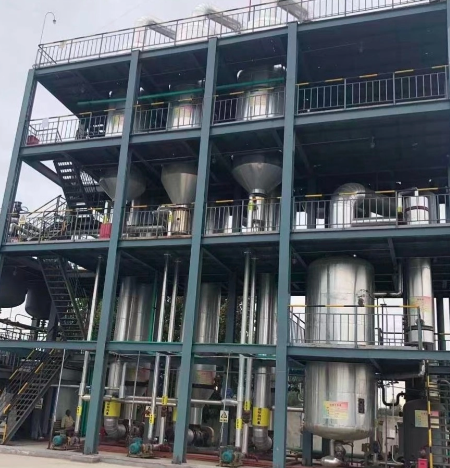
Distillation works by using the principle of boiling points—water boils at a much lower temperature than salt. When saltwater is heated to its boiling point, the water turns into steam, while the salt remains behind as solid residue. The steam can then be collected, condensed back into water, and separated from the salt.
This method is particularly useful when both fresh water and salt need to be collected, as it allows for the separation of both substances without leaving behind any contaminants.
Making a basic distiller at home is simple. Here’s how to do it:
1. Boil the Saltwater: Take a pot and heat it on the stove until the saltwater begins to boil.
2. Position the Lid: Place a lid on the pot but slightly offset it to allow the vapor to escape. Make sure the lid is positioned in such a way that the condensed water will run down into a separate container placed below.
3. Condense the Vapor: As the steam rises, it will come into contact with the cool surface of the lid, where it will condense into water droplets. These droplets will then travel down the lid and drip into the container below.
4. Collect the Water: Continue the process until most of the water has evaporated and condensed into the collection container. Once done, you’ll have purified water, with the salt remaining in the original pot.
Distillation not only produces purified water but also recovers the salt that can be used for other purposes. However, this method does require some equipment and time, making it less practical for larger quantities of water.
Filtration is often mistakenly thought of as a way to separate salt from water, but it’s important to understand its limitations. Filtration works by using a physical barrier, such as filter paper, to remove solid particles from liquids. While this method is highly effective for separating larger particles (like sand or dirt), it does not work for dissolved substances like salt.
Salt dissolves into water as ions, which are too small to be caught by standard filters. Therefore, filtration cannot remove dissolved salts from water, making it unsuitable for desalination purposes.
What Filtration Can Do | What Filtration Cannot Do |
Remove solid particles (e.g., sand) | Remove dissolved salts (e.g., sodium chloride) |
When salt is dissolved in water, it breaks into sodium and chloride ions. These ions are small enough to pass through typical filtration membranes, which only catch larger particles like sand or debris. As a result, filtration is useful for purifying water from physical contaminants but cannot address the issue of salt or other dissolved substances.
Despite this, filtration plays a vital role in many water purification systems, especially in combination with other methods. For example, filtration can remove particulate matter before using more effective techniques like reverse osmosis or distillation.
Freezing is another method to separate salt from water. The process takes advantage of the fact that water freezes before salt does. As the temperature drops, the water molecules begin to form ice crystals, which are almost entirely free of salt. The remaining liquid water, which is not yet frozen, becomes increasingly salty.
This method works because the salt does not fit into the crystalline structure of ice, meaning it stays behind as the water freezes. The process can be used to separate salt from water in smaller quantities, though it’s not ideal for large-scale desalination.
1. Place Saltwater in a Container: Pour your saltwater into a container, leaving space for ice to form.
2. Freeze the Water: Place the container in a freezer and allow the water to freeze completely. As it freezes, the salt will remain in the unfrozen water.
3. Separate the Ice: Once the water has frozen, remove the ice, which will be almost salt-free. The remaining liquid water can be discarded or processed further for additional desalination.
Freezing is best suited for small-scale operations or when access to freezing conditions is readily available. It is not practical for large-scale desalination due to the time and space required to freeze large volumes of water.
Reverse osmosis (RO) is one of the most effective methods of separating salt from water, especially at industrial scales. This technique uses a semipermeable membrane to filter out dissolved salts and other contaminants while allowing pure water to pass through under pressure. Reverse osmosis is commonly used in both residential desalination systems and large-scale operations, such as desalination plants.
Although reverse osmosis is highly effective at removing salt, it is expensive and requires a significant amount of energy. Moreover, the membrane used in reverse osmosis systems can degrade over time, leading to additional maintenance costs. However, its ability to produce large quantities of fresh water makes it an indispensable method for areas with limited access to clean water.
Electrodialysis uses electric fields to attract salt ions to oppositely charged electrodes, effectively separating the ions from the water. This method is more efficient for desalinating brackish water (water with lower salt concentrations) compared to seawater. Other emerging technologies, such as capacitive deionization, also use electric charges to remove ions from water.
While these methods are promising, they are still being refined for broader commercial use. For now, reverse osmosis remains the most widely used technology for large-scale desalination.
Method | Description |
Reverse Osmosis | Uses a semipermeable membrane to remove salts |
Electrodialysis | Uses electric fields to attract salt ions |
Capacitive Deionization | Uses electric charges to remove ions |
Each method of separating salt from water has its own advantages, depending on the context. Here’s a breakdown of the most common methods:
Method | Best For | Pros | Cons |
Evaporation | Small-scale salt extraction | Low cost, simple process | Slow, not suitable for large-scale |
Distillation | Collecting both pure water and salt | Purifies water, removes salt | Requires more equipment, time-consuming |
Filtration | Removing solid particles (e.g., sand) | Simple, cheap | Ineffective for salt removal |
Freezing | Small-scale, specialized desalination | Removes salt from ice | Not scalable, requires cold environments |
Reverse Osmosis | Large-scale desalination | Efficient, produces pure water | Expensive, energy-intensive |
Electrodialysis | Brackish water desalination | Effective for low-salinity water | Not suitable for seawater |
When choosing the best method for separating salt from water, consider the scale of operation, the intended use of the separated components (salt and/or water), and your available resources. For home use, evaporation and distillation are practical and cost-effective. For large-scale applications, reverse osmosis and electrodialysis offer higher efficiency but come with greater upfront costs and energy requirements.
Separating salt from water is crucial for various purposes, such as purifying drinking water and extracting salt for commercial use. Methods like evaporation, distillation, filtration, freezing, reverse osmosis, and electrodialysis each offer unique benefits depending on your needs. Evaporation and distillation are ideal for small-scale use, while reverse osmosis and electrodialysis are more efficient for larger operations.
ZheJiang VNOR Environmental Protection Technology Co., Ltd. provides advanced solutions in water treatment, ensuring efficient separation of salt from water. Their products offer high performance and reliability for both small-scale and industrial applications, meeting diverse customer needs effectively.
A: The most common methods to separate salt from water include evaporation, distillation, filtration, freezing, and reverse osmosis. Each method has its specific use depending on the scale and need for salt or water recovery.
A: To separate salt from water using evaporation, heat the saltwater in a shallow container until the water evaporates, leaving the salt behind as solid crystals.
A: Reverse osmosis uses a semipermeable membrane to separate salt from water by allowing only water molecules to pass through under pressure, making it highly efficient for large-scale desalination.
A: Distillation is relatively affordable for small-scale operations but becomes costly for large-scale applications due to the need for specialized equipment and energy to boil the water.
A: No, filtration cannot separate salt from water because salt dissolves into ions that pass through the filter. Filtration only removes solid particles like sand.
A: Experimenting with different methods helps you understand their advantages, limitations, and best-use scenarios, allowing you to choose the most efficient technique for your needs.

