
Views: 0 Author: Site Editor Publish Time: 2026-01-15 Origin: Site


Palm Oil Mill Effluent (POME) is a major environmental challenge. The wastewater produced during palm oil extraction contains harmful pollutants that can damage ecosystems. Without proper treatment, POME poses significant risks to water quality and air pollution.
In this article, we will explore the importance of POME treatment in mitigating these risks. You'll learn how advanced technologies help reduce pollution, recycle resources, and promote sustainability in the palm oil industry.
POME stands for Palm Oil Mill Effluent, which is the wastewater produced during the palm oil extraction process. It is mainly composed of organic materials, such as residual oil, water, and solid particles from the fruit. POME typically has a high concentration of organic pollutants, including oils, fats, and various chemicals, making it a significant environmental challenge.
Below is a table that breaks down the two primary types of POME and their characteristics:
Type of POME | Description |
Liquid waste from sterilization process | Produced during the sterilization of palm fruit bunches; contains high organic load from residual oils and water. |
Effluent from oil extraction and clarification | Generated during the oil extraction and clarification stages; consists of residual oil, water, and solid particles from the fruit. |
If not properly treated, POME can have devastating effects on the environment. When discharged into water bodies, the high organic load of POME depletes oxygen levels, which disrupts aquatic ecosystems and harms marine life. The degradation of organic material in POME also results in the production of methane, a potent greenhouse gas, further exacerbating climate change.
One of the most significant environmental risks associated with untreated POME is the release of methane into the atmosphere, a contributor to global warming. Moreover, untreated POME can lead to the contamination of groundwater and surface water, affecting local communities and wildlife.
Given these environmental risks, the effective treatment of POME is essential for sustainable palm oil production. Proper treatment not only mitigates the harmful impacts on the environment but also enables resource recovery, turning waste into valuable products.
Environmental Issue | Impact | Consequence | Potential Solution |
Oxygen depletion | High organic load in POME | Disrupts aquatic life and ecosystems | Efficient POME treatment to reduce BOD and COD |
Methane production | Breakdown of organic material in POME | Contributes to climate change and global warming | Biogas recovery via anaerobic digestion |
Water contamination | POME entering water sources | Contaminates groundwater and surface water | Proper treatment and water recycling |
The primary objectives of POME treatment focus on reducing pollution, recovering valuable resources, and transitioning towards a circular economy. These goals help palm oil mills operate more sustainably, reduce waste, and generate additional revenue streams. Below is a breakdown of the key goals:
Goal | Detail | Benefit |
Pollution Reduction | Reduce BOD and COD levels to lower organic pollutants in POME. | Ensures effluent is safe for discharge or reuse. |
Resource Recovery | Recover byproducts like biogas, water, and fertilizers from POME. | Generates additional revenue streams and reduces waste. |
Circular Economy | Transition from linear waste management to recycling and reuse. | Promotes sustainability by minimizing waste and optimizing resource utilization. |
The POME treatment system consists of several stages, each designed to address specific components of the effluent:
● Anaerobic Treatment: In this stage, bacteria break down organic material in the absence of oxygen. This process reduces the concentration of BOD and COD. Anaerobic bioreactors, such as Upflow Anaerobic Sludge Blanket (UASB) reactors, are commonly used in this phase. The breakdown of organic materials also produces biogas, primarily consisting of methane.
● Aerobic Treatment: Following anaerobic treatment, aerobic processes are applied to further break down remaining organic pollutants using oxygen. This process helps remove nitrogen and other residual organic matter, improving water quality. Aerobic treatment is usually implemented through aerated lagoons or activated sludge systems, which are more compact and efficient than traditional methods.
● Evaporation Systems: Compact evaporators, like POMEVap, separate the effluent into clean water, oil, and sludge. These systems are much more space-efficient than traditional pond systems and significantly reduce methane emissions, making them an ideal choice for modern mills.
These treatment stages work in concert to ensure that POME is effectively purified, allowing the recovery of valuable resources and minimizing environmental impact.
Traditional POME treatment relies on large pond systems, which are space-consuming and can be inefficient in terms of land usage. These ponds typically include anaerobic, facultative, and aerobic stages, where microorganisms break down the organic material in the effluent. While effective in reducing pollutants, pond systems have several drawbacks:
Land Space: The ponds require a large area, making them impractical for mills with limited space.
Methane Emissions: Methane is produced during the anaerobic treatment phase, contributing to greenhouse gas emissions.
Long Retention Time: Treatment in pond systems takes a long time, leading to delays in effluent discharge and space constraints.
Despite these limitations, pond systems remain popular due to their relatively low initial costs and simple design.
In contrast to traditional methods, modern POME treatment systems utilize advanced technologies that offer greater efficiency and environmental benefits:
● Compact Evaporators (POMEVap, POMETHANE): These advanced systems use heat to evaporate water from POME, leaving behind concentrated oil and solid sludge. This process reduces the overall volume of waste, recycles water, and captures methane for energy production, making it a more sustainable option than traditional ponds.
● Anaerobic Bioreactors (UASB Reactors, Membrane Filtration): UASB reactors utilize bacteria to break down organic material in the effluent, producing biogas and reducing the need for large treatment ponds. Membrane filtration can be used to remove suspended solids, nitrogen, and other contaminants, ensuring high-quality effluent for discharge or reuse.
● Integrated Systems: Some of the most advanced systems combine various treatment technologies, such as evaporation systems with decanters or membrane filtration. These integrated systems maximize the recovery of valuable resources, like biogas and water, and further reduce waste.
These modern treatment methods are more efficient, environmentally friendly, and cost-effective, contributing to the palm oil industry's long-term sustainability goals.
Aspect | Traditional Pond Systems | Modern Treatment Systems |
Technology | Anaerobic, facultative, and aerobic ponds | Compact evaporators (POMEVap), anaerobic bioreactors (UASB), membrane filtration |
Space Efficiency | Requires large land area | More space-efficient, compact systems |
Methane Emissions | Methane produced during anaerobic treatment | Methane captured for energy production |
Treatment Speed | Long retention time, slower processing | Faster processing with reduced retention time |
Resource Recovery | Limited resource recovery | Recover biogas, water, and other valuable byproducts |
Cost | Low initial cost, simple design | Higher initial investment, but more cost-effective long-term |
Environmental Impact | Higher environmental impact due to emissions and space use | Lower environmental impact with more sustainable practices |
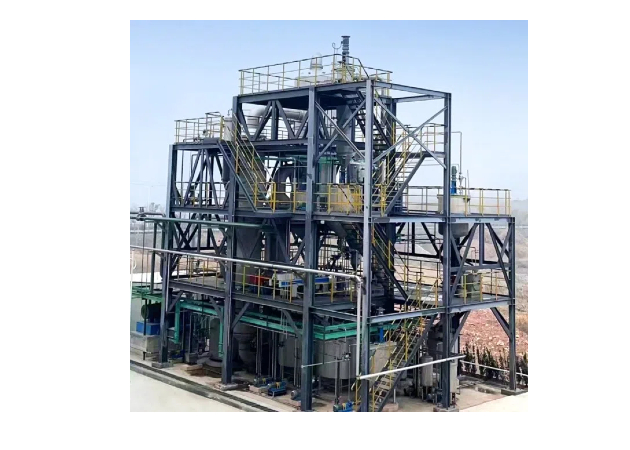
Anaerobic digestion plays a vital role in POME treatment. In this process, microorganisms break down organic materials without oxygen, producing biogas (primarily methane). The captured biogas can be used to generate electricity or heat, providing a renewable energy source for the mill. This not only reduces the mill's reliance on external energy sources but also helps offset the costs of POME treatment.
Biogas recovery from POME is an efficient and sustainable way to manage waste and reduce greenhouse gas emissions. By integrating anaerobic digestion into the treatment system, palm oil mills can improve both their environmental and economic performance.
Evaporation systems like POMEVap offer a cutting-edge solution for treating POME. These systems use heat to separate POME into clean water, oil, and sludge. This method is more space-efficient than traditional ponds, and it significantly reduces methane emissions by avoiding anaerobic decomposition. Additionally, the recovered water can be reused within the mill, reducing water consumption and improving overall efficiency.
Evaporation systems contribute to a circular economy by recovering valuable resources while minimizing the environmental footprint of palm oil mills. They are becoming increasingly popular as the palm oil industry seeks more sustainable and efficient ways to manage POME.
Membrane filtration is a highly effective technology for treating POME. The process involves passing POME through a semipermeable membrane that removes suspended solids, nitrogen, turbidity, and other contaminants. Membrane filtration can be used in conjunction with bioreactors that use biofilm carriers to further improve treatment performance.
This technology is more space-efficient than traditional pond systems and allows for high-quality effluent to be produced. Moreover, membrane filtration systems can be integrated with other treatment technologies, further enhancing efficiency and resource recovery.
Technology | Description | Benefit |
Anaerobic Digestion | Microorganisms break down organic material to produce biogas. | Generates renewable energy and reduces emissions. |
Evaporation Systems | Uses heat to separate POME into clean water, oil, and sludge. | Space-efficient, reduces methane emissions, recycles water. |
Membrane Filtration | Uses a semipermeable membrane to filter out contaminants. | Produces high-quality effluent, space-efficient. |
The most significant benefit of an effective POME treatment system is the reduction in environmental pollution. By lowering BOD and COD levels and recovering methane for energy production, modern treatment systems help protect local ecosystems and contribute to global efforts to combat climate change. These systems also reduce the contamination of water bodies and the release of harmful gases into the atmosphere.
In addition to environmental benefits, effective POME treatment provides several economic advantages:
● Biogas Recovery: Capturing biogas for energy production can reduce operational costs by providing a renewable energy source.
● Water Recycling: The treated water can be reused within the mill, reducing water consumption and associated costs.
● Fertilizer Production: The solid residues from POME treatment can be converted into fertilizers, generating an additional revenue stream for mills.
These economic benefits make advanced POME treatment systems an attractive investment for palm oil mills looking to reduce costs and improve sustainability.
An efficient POME treatment system contributes to the palm oil industry's shift toward a circular economy. By recycling water, recovering biogas, and repurposing solid waste into fertilizers, mills can minimize their environmental impact and maximize resource efficiency. This transition from a linear "take, make, dispose" model to a circular one is crucial for long-term sustainability.
Benefit | Description | Impact |
Environmental Impact | Reduces BOD, COD, and methane emissions. | Protects ecosystems, reduces pollution. |
Biogas Recovery | Captures biogas for energy. | Lowers costs, provides renewable energy. |
Water Recycling | Reuses treated water in the mill. | Cuts water use and reduces costs. |
Fertilizer Production | Converts POME residues into fertilizers. | Generates extra revenue for mills. |
Circular Economy | Recovers resources like water and biogas. | Reduces waste, improves efficiency. |
Modern POME treatment systems help palm oil mills meet increasingly strict environmental regulations. By reducing pollution and capturing methane for energy production, mills can comply with carbon emission reduction targets and contribute to global sustainability efforts.
The demand for sustainable palm oil continues to grow, and POME treatment plays a key role in the industry's transition toward more environmentally friendly practices. By adopting advanced treatment technologies, palm oil mills can improve their sustainability credentials and meet the expectations of consumers, regulators, and stakeholders.
The POME treatment system plays a vital role in reducing the environmental impact of palm oil mills. By utilizing modern technologies like anaerobic digestion, evaporation systems, and membrane filtration, palm oil mills can lower pollution, recover resources, and support a circular economy. ZheJiang VNOR Environmental Protection Technology Co., Ltd. offers innovative solutions that help mills achieve these goals, providing advanced systems that enhance sustainability and efficiency in the palm oil industry.
A: The POME treatment system is designed to treat Palm Oil Mill Effluent (POME), reducing pollution and recovering valuable resources through technologies like anaerobic digestion, evaporation systems, and membrane filtration.
A: POME treatment is essential to prevent water contamination, reduce greenhouse gas emissions, and recover resources like biogas and water, promoting sustainability in the palm oil industry.
A: By converting waste into useful byproducts such as biogas and water, POME treatment helps palm oil mills adopt circular economy practices, minimizing environmental impact.
A: POME treatment employs anaerobic digestion, evaporation systems like POMEVap, and membrane filtration to reduce waste, recover biogas, and recycle water for reuse.
A: Anaerobic digestion breaks down organic materials in POME without oxygen, producing biogas that can be used for energy, reducing both pollution and operational costs.
A: POME treatment systems reduce pollution, lower operating costs, enhance resource recovery, and help mills meet environmental regulations, contributing to a more sustainable palm oil industry.

