
Views: 0 Author: Site Editor Publish Time: 2026-01-13 Origin: Site


The palm oil industry is vital to the global economy, providing products like cooking oil and biofuels. However, the production process generates Palm Oil Mill Effluent (POME), which poses serious environmental risks. POME contains harmful pollutants that, if untreated, can pollute water bodies, soil, and air.
In this article, we will explore the challenges of treating POME and the need for sustainable solutions. You will learn about both traditional and emerging treatment methods, aiming to reduce environmental impact and promote resource recovery.
POME is predominantly composed of water (95–96%), oils (0.6–0.7%), and suspended solids (2–4%). Additionally, it contains a range of organic compounds, including carotene, pectin, tannin, lignin, and phenolic substances. The high organic matter content makes it rich in nutrients but also extremely polluting.
The main pollutants found in POME include:
● Chemical Oxygen Demand (COD): This is a measure of the organic matter present in the effluent, which can lead to oxygen depletion in water bodies.
● Biological Oxygen Demand (BOD): This indicates the amount of oxygen consumed by bacteria during the breakdown of organic materials, reflecting the biodegradability of the effluent.
● Total Suspended Solids (TSS): These are solid particles suspended in the effluent, which can clog waterways and affect water quality.
Due to its high levels of COD and BOD, POME is considered a significant environmental pollutant, especially when released untreated into natural ecosystems.
The environmental impact of untreated Palm Oil Mill Effluent (POME) is significant and affects both aquatic and terrestrial ecosystems. If POME is not properly treated, it can lead to various forms of environmental degradation. Below are the main environmental concerns associated with untreated POME:
Environmental Impact | Impact Details |
Oxygen Depletion | Direct discharge of POME into water bodies consumes dissolved oxygen, leading to hypoxia, which harms aquatic life. |
Soil Degradation | POME's high acidity can damage soil, reducing its fertility and making it unsuitable for agricultural use. |
Harm to Aquatic Habitats | The oil and grease content in POME can smother aquatic habitats, harming fish populations and disrupting biodiversity. |
Greenhouse Gas Emissions | Anaerobic treatment of POME produces methane, a potent greenhouse gas, which, if not captured, contributes to the carbon footprint of the palm oil industry. |
Given the increasing demand for palm oil and the growth of the palm oil industry, the treatment of POME is a priority not only for meeting environmental regulations but also for ensuring the long-term sustainability of the industry. Effective POME treatment solutions are needed to reduce the environmental impact, conserve natural resources, and promote energy recovery, which can offset treatment costs.
New treatment methods are being developed that move beyond traditional ponding systems, focusing on higher efficiency, faster processing times, and the ability to recover valuable resources from POME, such as biogas and reusable water.
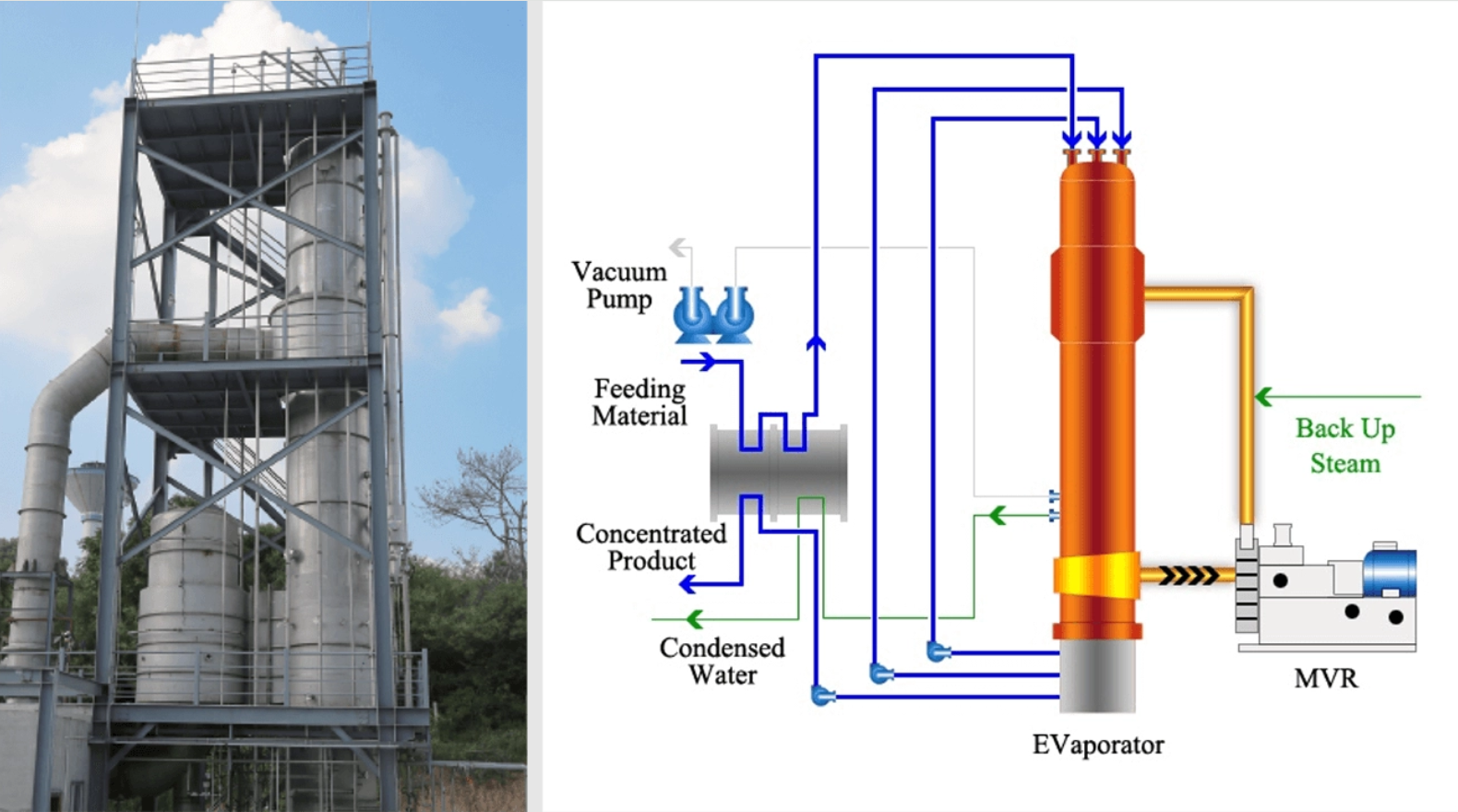
Ponding systems, which include both anaerobic and aerobic ponds, are the most common traditional methods used for POME treatment. These systems rely on microbial processes to break down organic pollutants in the effluent. In the anaerobic stage, microorganisms degrade the organic matter in the absence of oxygen, producing biogas, including methane. In the aerobic stage, oxygen is supplied to further break down remaining pollutants.
Ponding systems are relatively simple and inexpensive, with low maintenance costs. However, they require large amounts of land and long hydraulic retention times (HRT), often ranging from 100 to 160 days. These systems can be inefficient in areas with limited land availability, and the production of methane in anaerobic ponds is a significant environmental concern, as it contributes to greenhouse gas emissions.
Advantages | Disadvantages |
System construction is relatively simple | Requires large land resources |
Low construction cost | Long hydraulic retention time, typically 100-160 days |
Low maintenance cost | Treatment efficiency is low in areas with limited land |
In many cases, palm oil mills are now looking for alternatives that require less space and offer higher pollutant removal efficiency.
Anaerobic digestion is one of the most common biological treatment methods used in POME treatment. In this process, microorganisms break down organic matter in an oxygen-free environment, producing biogas as a byproduct. The main advantage of anaerobic digestion is its ability to handle high concentrations of organic material and to produce renewable energy in the form of biogas, which can be used to power the mill's operations.
Integrated Anaerobic-Aerobic Bioreactors combine the benefits of both anaerobic and aerobic treatment processes in one system. This hybrid approach provides high pollutant removal efficiency and faster treatment times compared to traditional ponding systems. The anaerobic stage reduces organic content, while the aerobic stage ensures further degradation of remaining pollutants.
This method is particularly effective for removing COD and BOD, making it an efficient and compact solution for palm oil mills looking to reduce the land area required for treatment.
Treatment Method | Key Feature |
Ponding Systems | Simple, inexpensive, uses anaerobic and aerobic processes |
Anaerobic Digestion | Breaks down organic matter, produces biogas for energy |
IAAB | Combines anaerobic and aerobic for higher efficiency |
Membrane filtration involves the use of semi-permeable membranes to separate contaminants from water. This method is highly effective at removing suspended solids, oils, and organic pollutants, achieving near-complete removal of contaminants. Microfiltration and ultrafiltration are commonly used in POME treatment for this purpose.
While membrane filtration offers high efficiency, it is energy-intensive and comes with high operational costs. For large-scale palm oil mills, this method may not be economically feasible unless it is used in conjunction with other treatment technologies.
Membrane filtration is often employed as a final treatment step after biological treatment methods, serving as a polishing process to ensure that the effluent meets required discharge standards.
AOPs use strong oxidants to break down complex organic compounds in POME, making them one of the most effective methods for treating recalcitrant pollutants. Techniques such as Fenton’s process, ozonation, and photocatalysis are commonly used in AOPs to remove pollutants that are difficult to degrade biologically.
AOPs are effective at mineralizing organic contaminants and improving the overall quality of treated effluent. However, these processes require high energy input and have high operational costs. Therefore, AOPs are typically used as a tertiary treatment method, after other treatment processes have been employed.
Adsorption involves the use of materials like activated carbon or natural adsorbents such as palm kernel shells, banana peels, and coconut shells to capture and remove oils, suspended solids, and other contaminants from POME. These materials are cost-effective and environmentally friendly, especially when locally sourced.
Although adsorption is an effective and sustainable method, the challenge lies in the disposal of saturated adsorbents. However, with proper management and regeneration of adsorbents, this method can be a viable solution for smaller-scale operations.
Local biomass materials provide a cost-effective way to treat POME, particularly for mills located in areas with abundant agricultural waste.
Treatment Method | Key Feature | Common Materials/Techniques | Advantages |
Membrane Filtration | Effective at removing solids, oils, and pollutants | Microfiltration, ultrafiltration | High efficiency, near-complete removal |
Advanced Oxidation Processes (AOPs) | Uses strong oxidants to break down tough pollutants | Fenton’s process, ozonation, photocatalysis | Effective for recalcitrant pollutants |
Adsorption | Uses adsorbents to capture and remove contaminants | Activated carbon, palm kernel shells, banana peels | Environmentally friendly, cost-effective |
Phytoremediation involves the use of plants to remove contaminants from POME, while microalgae cultivation can absorb excess nutrients and pollutants from the effluent. Both approaches are environmentally sustainable and promote biodiversity.
While these methods are promising, they are slow and require significant land areas to be effective. They are more suitable for smaller operations or as supplementary methods alongside more established treatments.
By integrating phytoremediation with other treatment technologies, mills can increase the overall effectiveness and sustainability of their treatment processes.
Hybrid systems combine multiple treatment methods, such as plasma treatment, acoustic waves, and aerobic processes, to optimize POME treatment. These systems are emerging as efficient solutions for large-scale treatment, reducing processing time and improving overall system performance.
Hybrid systems offer the advantage of reducing treatment time and space requirements, making them ideal for mills that need to process large volumes of effluent efficiently.
Treatment Method | Key Feature | Advantages | Challenges |
Phytoremediation & Microalgae | Uses plants and microalgae to absorb pollutants | Environmentally friendly, promotes biodiversity | Slow, requires large land areas |
Hybrid Systems | Combines multiple treatment technologies | Reduces treatment time, efficient | Requires integration, can be complex |
An integrated treatment system combines various methods—screening, air flotation, biological treatment, and membrane filtration—into a single cohesive process. By optimizing each stage of treatment, mills can significantly improve overall efficiency, reduce energy consumption, and minimize the environmental impact of POME.
A typical process flow might involve screening to remove large solids, followed by air flotation to separate oils, biological treatment for organic matter reduction, and final membrane filtration for polishing.
In the treatment of Palm Oil Mill Effluent, an integrated system often involves a combination of different treatment methods. These methods work together in a multi-stage process to ensure high efficiency and effective pollutant removal. Below is an example of a typical process flow:
● Anaerobic Digestion: Breaks down organic matter without oxygen, producing biogas.
● Aerobic Treatment: Introduces oxygen to further break down remaining pollutants.
● Membrane Filtration: A final step that removes remaining solids and contaminants, ensuring that the effluent meets discharge standards.
One of the most significant benefits of effective POME treatment is the potential for resource recovery. Biogas generated from anaerobic digestion can be used as a renewable energy source, reducing the mill’s reliance on external power. Additionally, treated water can be recycled for non-potable uses, such as irrigation or cleaning processes within the mill.
By adopting sustainable treatment technologies, palm oil mills can meet environmental standards while also recovering valuable resources. This approach helps reduce operational costs and promotes the long-term sustainability of the palm oil industry.
Exploring biogas recovery options and reusing treated water can provide both environmental and economic benefits, making POME treatment more cost-effective and sustainable.
Resource Recovery | Key Benefit | Sustainability Impact |
Biogas Recovery | Provides renewable energy for mill operations | Reduces reliance on external power sources |
Recycled Treated Water | Can be reused for irrigation and cleaning | Reduces water consumption, supporting sustainability |
The treatment of Palm Oil Mill Effluent is a growing concern for the palm oil industry. Traditional methods like ponding systems remain in use, but more efficient technologies are emerging. Integrated systems, anaerobic-aerobic bioreactors, membrane filtration, and advanced oxidation processes offer better treatment efficiency and environmental sustainability.
As regulations tighten, these advanced technologies are essential in reducing pollution, cutting costs, and improving resource recovery. Companies like ZheJiang VNOR Environmental Protection Technology Co., Ltd. are at the forefront, offering innovative solutions to enhance POME treatment and ensure both environmental and economic sustainability.
A: Palm Oil Mill Effluent (POME) treatment involves various processes to remove pollutants such as oils, organic matter, and suspended solids from wastewater generated during palm oil production.
A: POME treatment is crucial to prevent environmental pollution, protect aquatic life, and meet increasing global environmental regulations related to wastewater discharge.
A: Anaerobic-aerobic bioreactors combine both processes for high pollutant removal efficiency, reducing treatment time and improving environmental sustainability in POME treatment.
A: Membrane filtration effectively removes suspended solids and oils, ensuring near-complete pollutant removal, though it may require high energy and initial investment.
A: The cost of POME treatment varies depending on the method used, with advanced technologies like membrane filtration and AOPs typically being more expensive than traditional systems.
A: The main challenges include the high volume of wastewater, the complexity of pollutants, and the need for efficient, cost-effective treatment solutions that comply with environmental regulations.

