
Views: 0 Author: Site Editor Publish Time: 2025-11-04 Origin: Site


MVR technology cleans heavy metal wastewater very well. It can recover up to 98% of metals like nickel and copper.
The process is quick. Many systems finish cleaning in 2 to 8 hours. This helps industries follow strict rules.
MVR technology cuts energy costs a lot. It saves up to 90% compared to older methods. It also makes less wastewater.
Using MVR can lower costs for running the system. It also helps get back more metals. This makes it a good choice for many industries.
Regular care is needed for best results. Daily checks and cleaning stop problems and keep things working well.
MVR technology helps clean heavy metal wastewater. It does this by making metals in water stronger and easier to separate. First, you put dirty water into the system. The mechanical vapor recompression unit heats the water. This makes steam. The system squeezes the steam to make it hotter and under more pressure. The hot steam gives energy to evaporate more water. When water turns to steam, metals like nickel and copper stay in the liquid. The metals get stronger in the leftover water. You can collect clean water as condensate. You can also take out the metals to use again or throw away safely.
MVR technology uses a closed energy cycle. It uses heat from steam again and again. This means you do not need much outside energy. The process saves more energy than old evaporation methods. You can add waste heat recovery units to save even more energy.
MVR technology can separate nickel and copper from wastewater very well. The system works for different types and amounts of wastewater. When water evaporates, nickel and copper ions stay in the leftover liquid. They get stronger. You can use other steps like precipitation or filtration. These steps help you separate each metal from the mix.
You can also get other metals like cobalt, manganese, aluminum, iron, and lithium. This makes MVR technology useful for many industries. Some examples are metalworking, chemical production, and battery recycling.
Many things change how well MVR technology works to recover metals. You should look at these important points:
Key Factor | Description |
|---|---|
Energy Source | You can save up to 90% on energy compared to other systems. |
Material Properties | Viscosity, density, and boiling point elevation affect heat transfer. |
Process Conditions | Feed concentration, flow rate, and vacuum levels determine performance. |
Environmental Factors | Altitude and cooling water availability affect condenser operation. |
Fouling & Scaling | These reduce efficiency and increase cleaning frequency. |
You can get these good results:
Lower costs because you need less outside heat.
High efficiency, with some systems recycling over 97% of water.
Less wastewater, so you send less water for treatment.
Product recovery can go up by 25% after using MVR technology.
Energy use can drop by 60% compared to old vacuum distillation systems.
Tip: MVR technology became popular in the 1970s when energy costs went up. Today, you can use it in many places like industrial painting, metal finishing, and landfill leachate treatment.
When you clean heavy metal wastewater, you want it done fast. MVR technology can handle a lot of water quickly. Many systems finish a batch in less than 8 hours. Some new systems can finish in just 2 to 4 hours. You can run these systems all day without stopping. This helps you keep up with work and follow the rules.
How long it takes depends on how much metal is in the water. If there is a lot of nickel or copper, it might take longer. You can change the system to work with different kinds of wastewater. Most people see faster results than with old ways.
Note: You can make the process faster by using higher heat and a stronger vacuum. This helps you get clean water and recover metals more quickly.
You might wonder how much nickel and copper you can get back. MVR technology gives you high recovery rates. Many systems get back more than 95% of nickel and copper. Some systems can even reach 98% recovery for these metals.
Here is a table that shows normal recovery rates:
Metal | Typical Recovery Rate (%) |
|---|---|
Nickel | 95 - 98 |
Copper | 95 - 98 |
You can use these metals again in your work. This saves money and is good for the environment. You also have less waste to treat or throw away.
Many factories use MVR technology to clean heavy metal wastewater. You can find it in places like metal plating, battery recycling, and electronics making.
A battery recycling plant in China used MVR technology for nickel-rich wastewater. The plant got back 97% of nickel and finished 40% faster.
An electronics factory in Germany cleaned copper wastewater. The system got back 96% of copper and used half as much energy.
A metal finishing company in the United States treated mixed metal wastewater. The company finished faster and saved thousands of dollars each year.
Tip: You can ask suppliers for stories from other companies like yours. This helps you see real results before you pick a system.
You can see that MVR technology works fast and gets back a lot of metals. Many industries use this method to meet their needs.
You want to clean heavy metal wastewater fast. MVR technology does this quicker than older ways. Here is how it compares to other systems:
MVR technology uses less steam, so it saves energy.
You get more clean water back and waste less.
You need more electricity, but you finish faster.
Multi-effect evaporators use heat in steps to save energy, but they take longer.
MVR systems work with some vacuum. This lowers boiling point and helps stop scaling.
MVR technology gives you both speed and good results. You can reach Zero Liquid Discharge goals more easily.
You want to get back as much nickel and copper as you can. MVR technology helps you recover up to 98% of both metals. Older methods lose more metals during cleaning. You also meet strict rules for metal discharge. Here is a table with some important standards:
Regulatory Standard | Description |
|---|---|
Regulation Name | Metal Products and Machinery (MP&M) Effluent Guidelines |
Year Promulgated | 2003 |
Applicable Facilities | About 2,400 facilities for metal products |
Key Pollutants | Oil and grease, total suspended solids |
Compliance Reporting | Baseline monitoring report 90 days before discharge; semi-annual reporting |
Effluent Limitations | Daily maximum limits based on best technology |
MVR technology helps your facility follow these rules.
You want to save money and energy. MVR technology gives you big savings compared to old systems. Here is a table that shows the benefits:
Advantage | Benefit | Typical Energy Savings |
|---|---|---|
Significant Energy Savings | Up to 90% less consumption | 70–90% |
Lower Operational Costs | Less steam and fuel needed | 50–70% |
Environmental Sustainability | Less CO2 and water used | 40–60% |
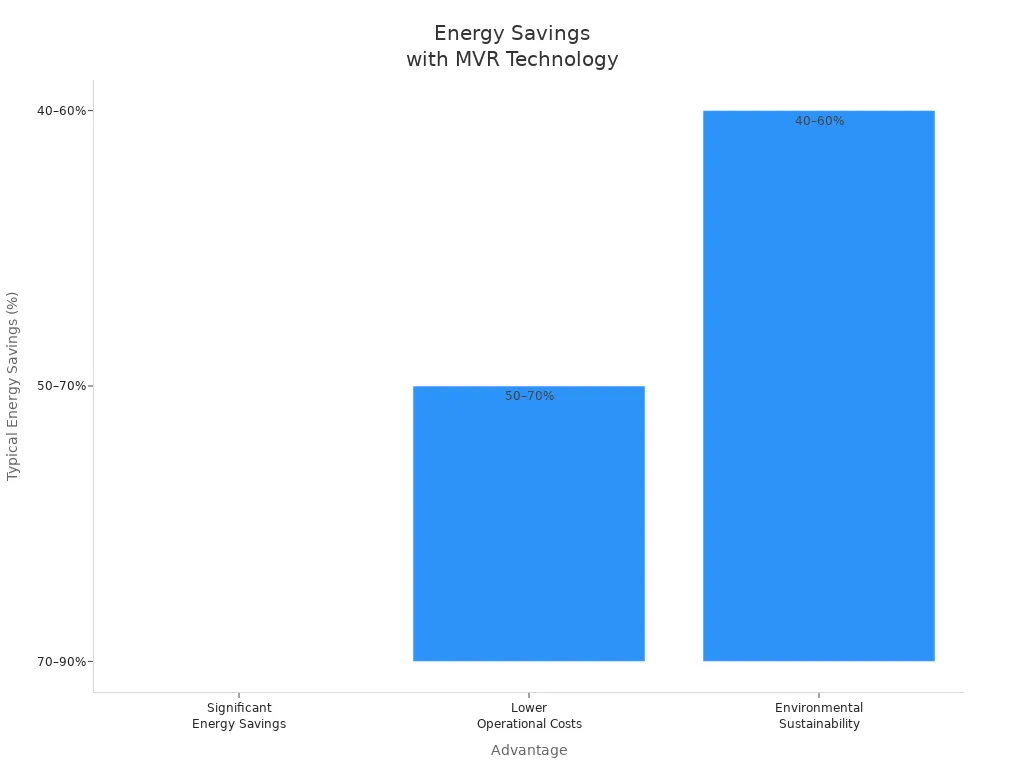
You save energy and money with MVR technology. You also help the environment by using less water and making less pollution.
Tip: Ask your supplier for real numbers about energy savings before you pick a system.
You should know what is in your wastewater first. Some types of wastewater work better with MVR technology. MVR systems are good for heavy metal wastewater from electroplating and metal recovery. You can use them to make plating baths stronger and get back precious metals. These systems help you spend less on getting rid of waste. They also help you have less wastewater to deal with. You get more value from your materials.
Electroplating wastewater
Metal recovery process water
Plating bath concentrates
Tip: Always test your wastewater for metals and other chemicals. This helps you pick the right way to treat your water.
You need to think about how big your plant is. MVR technology works for small and big plants. If you treat landfill leachate, MVR systems can handle different pollution levels. You can save money by using pretreatment steps like coagulation. This step can cut your treatment costs by over 27%. Big systems cost more at the start. You pay 30–40% more than old evaporators. But you save money later because MVR uses less energy and follows rules better.
Cost Aspect | MVR Technology | Traditional Evaporators |
|---|---|---|
Initial Investment Cost | 30-40% higher than traditional | Baseline cost |
Long-term Savings | Significant due to energy efficiency | Variable |
Operational Cost Reductions | Yes | Limited |
Compliance with Regulations | High | Moderate |
Adoption Challenges | High initial costs and complexity | Lower barriers |
Note: High starting costs and system complexity can make it harder to use MVR. You need to plan for these problems.
You must keep your MVR system working well. Check and clean it often to stop problems and keep it fast. Here is a simple schedule for taking care of your system:
Frequency | Maintenance Tasks |
|---|---|
Daily | Check how the system works, look at pumps, blowers, and tanks. |
Weekly | Clean filters and screens, take out sludge from tanks. |
Monthly | Check equipment health, test backup systems, calibrate sensors, train staff on maintenance. |
Quarterly | Look at gaskets and seals, check pipes, call for professional help if needed. |
Annual | Do a full check of equipment, update schedules, and tell your team about changes. |
You need to follow safety rules. Wear gloves, boots, safety glasses, and coveralls. Use a respirator if you work near dangerous gases. Test equipment and air quality often. Train your team and check machines regularly. These steps keep everyone safe and help your system work well.
You can use MVR technology to clean heavy metal wastewater fast. It helps you get nickel and copper back with good results. This method works for wastewater with lots of metals. It helps you reach zero liquid discharge goals. You save energy and spend less money. The table below shows why industries like this technology:
Description | Key Points |
|---|---|
High-concentration wastewater | Fast metal recovery |
Zero liquid discharge | Less waste, more recovery |
Energy and cost savings | Lower bills, efficient process |
You should look at your wastewater type. You also need to plan for higher starting costs.
You can treat most batches in 2 to 8 hours. The exact time depends on how much metal is in your water and the system size. You can run the process all day for continuous cleaning.
Yes, you can recover up to 98% of nickel and copper. MVR technology helps you reuse these metals in your process or sell them. This reduces waste and saves money.
You pay more at the start compared to older systems. However, you save money over time because you use less energy and need less maintenance. Many companies see lower costs after a few years.
You should check pumps, filters, and tanks daily. Clean screens weekly. Inspect equipment monthly. Train your team to spot problems early. Regular care keeps your system running fast and safe.

