
Views: 0 Author: Site Editor Publish Time: 2025-09-23 Origin: Site


You encounter MVR evaporators in industries that demand high efficiency and energy savings. MVR, or mechanical vapor recompression, uses advanced technology to recycle vapor as a heat source, making the evaporator ideal for sustainable operations. The global market for MVR evaporators reached USD 2.5 billion in 2023 and is projected to grow rapidly.
| Industry | Application Description |
|---|---|
| Pharmaceuticals | Concentrating active ingredients with high purity, ensuring compliance with strict standards. |
| Food Processing | Producing concentrated fruit juices and dairy products while maintaining flavor and nutrients. |
| Wastewater Treatment | Recovering water from industrial effluents, reducing disposal costs, and meeting environmental regulations. |
| Chemical Manufacturing | Recovering solvents and concentrating chemical solutions, minimizing raw material use. |
| Desalination & Brine Concentration | Producing potable water and managing saline waste streams efficiently. |
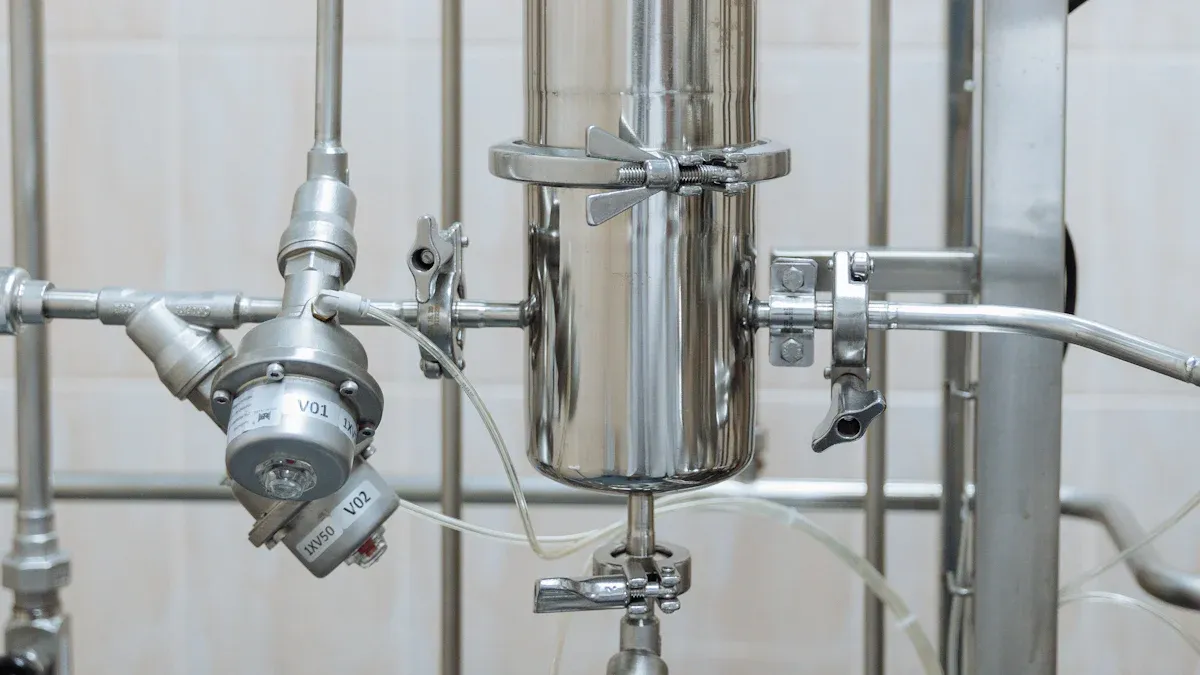
When you look at the mvr evaporator industry, you see a network of specialized suppliers who deliver the essential parts that drive performance and reliability. These upstream suppliers focus on quality and innovation, making sure each mvr evaporator meets strict industrial standards.
You find several leading companies that supply critical components for mvr systems:
ENCON sources high-quality parts from trusted brands such as Rosemount, Gould, Sulzer, Ashcroft, and Endress Hauser. These brands provide reliable compressors, sensors, and control systems.
Thermosag stands out in India for its focus on energy efficiency and sustainability in mvr evaporator design.
Each supplier plays a unique role in supporting the mvr ecosystem. You rely on their expertise to ensure your evaporator operates smoothly and delivers consistent results.
The most critical components supplied for mvr evaporators include:
| Component | Role in System Performance |
|---|---|
| Heat Exchanger | Delivers energy to the liquid feed, ensuring effective evaporation and high heat transfer rates. |
| Vapor Separator | Separates vapor from liquid, protecting the compressor and maintaining long-term efficiency. |
| Mechanical Compressor | Raises vapor pressure and temperature, boosting system performance and enabling vapor reuse. |
| Pumps | Maintains steady liquid flow, reducing fouling and supporting operational stability. |
| Controls | Regulates pressure, temperature, and compression ratio, optimizing energy use through automation. |
You depend on these components to maximize the efficiency of your mvr evaporator. The heat exchanger and compressor work together to recycle vapor, while advanced controls help you monitor and adjust system parameters for peak energy savings. Reliable pumps and separators keep the process stable, reducing downtime and maintenance.
Upstream suppliers continue to innovate, offering materials like titanium and stainless steel for durability and corrosion resistance. Their commitment to quality helps you achieve better results with every mvr installation.
You rely on midstream manufacturers to transform high-quality components into complete mvr evaporator systems. These companies assemble compressors, heat exchangers, and controls into integrated solutions that deliver reliable performance. The process often involves factory assembly, where you see skid-mounted systems pre-built with valves, pumps, and instrumentation. This approach reduces on-site installation time and ensures seamless integration with your existing processes.
| Component Type | Description |
|---|---|
| Skid-Mounted System | Pre-assembled modules with all key parts, ready for quick deployment. |
| Integration Process | Designed for easy connection to your plant, minimizing downtime. |
| Factory Assembly | Built and tested in controlled environments for consistent quality. |
You benefit from these systems through low power consumption, water recycling, and valuable resource recovery. Manufacturers focus on reducing solid waste management costs, making the mvr evaporator a smart investment for your operations.
You witness rapid growth in the mvr evaporator market. The global vacuum evaporators market is projected to rise from USD 3.50 billion in 2025 to USD 4.91 billion by 2030, with a compound annual growth rate of 7.0%. MVR technology leads this expansion due to its energy efficiency and cost-effectiveness. Manufacturers now prioritize systems that recycle energy from secondary steam, cutting operational costs and supporting sustainability. In beverage production, for example, you see how these systems optimize liquid concentration while reducing reliance on external energy sources.
Recent advancements include AI-driven automation and the use of advanced materials. These innovations improve reliability and extend the lifespan of your evaporator, making manufacturing more efficient and environmentally friendly.
You have many choices when selecting an mvr evaporator manufacturer. Leading companies in the field include:
Saltworks Technologies
GEA Group
Veolia Water Technologies
Alfa Laval
Myande Group
NEWater (with annual production capacity from 600 to 27,000 m³)
Sanfeng Tech
Goldfinch
Rosenblad Design Group
Major Chinese companies
Manufacturers compete by offering tailored solutions, advanced automation, and robust after-sales support. You gain from this competition through better technology, improved efficiency, and lower costs.
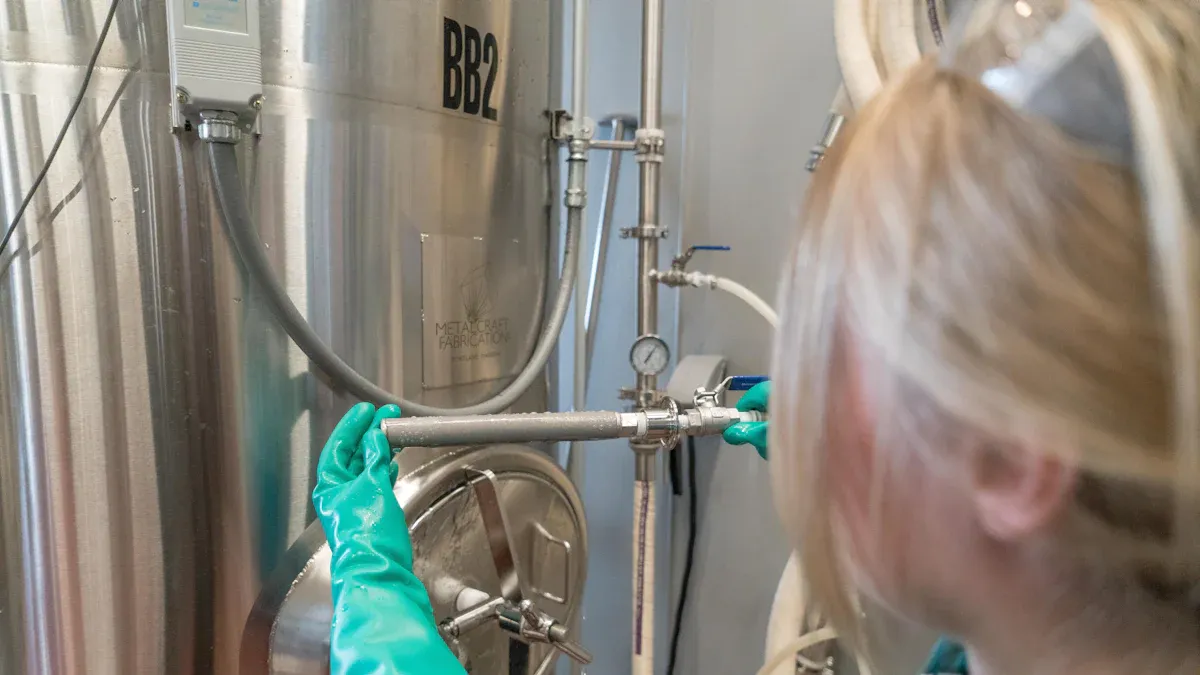
You see mvr evaporators at work in a wide range of industries. These systems help you achieve high efficiency and meet strict environmental standards. The chemical industry leads in market share, followed by the environmental sector and then food and beverage. Here is a quick overview:
| Industry | Market Share Position |
|---|---|
| Chemical Industry | Largest |
| Environmental Industry | Second |
| Food and Beverage | Third |
You rely on mvr evaporators for many applications. In environmental protection, you treat wastewater from electroplating, metal processing, and papermaking. The chemical industry uses mvr to concentrate and purify raw materials like sodium sulfate and sodium hypochlorite. In pharmaceuticals, you concentrate and dry both Western and traditional medicines. The food industry depends on mvr evaporators for deep processing, such as concentrating corn slurry and extracting glucose. Beverage producers use these systems to concentrate products like fruit juice and tomato sauce.
| Industrial Sector | Specific Application Cases |
|---|---|
| Environmental Protection | Treatment of industrial wastewater in electroplating, coating production, pharmaceutical and pesticide, metal processing, papermaking, and crude oil production. |
| Chemical Industry | Production of chemical raw materials (sodium sulfate, sodium persulfate, sodium hypochlorite), purification of fragrances, treatment of industrial process water, seawater desalination, concentration and crystallization of organic additives. |
| Pharmaceutical Industry | Evaporation, concentration, crystallization, and drying of Western medicine production and concentration of traditional Chinese medicine. |
| Food Industry | Dehydration functions in deep processing, such as concentrating corn slurry and extracting glucose, amino acids, etc. |
| Beverage Industry | Concentration treatment for products like tomato sauce, fruit juice, and fruit jam. |
You choose mvr evaporators for several reasons:
Increasing demand across sectors like chemical, petrochemical, food and beverage, and pharmaceuticals.
Stricter environmental regulations that require sustainable solutions.
A focus on energy efficiency and reducing energy consumption.
New technology that improves reliability and performance.
You notice new opportunities for mvr evaporators in emerging markets. Milk concentration stands out as the largest application, helping you produce condensed milk and milk powders while keeping nutritional value high. Whey processing is growing fast, driven by the need for high-quality whey protein. MVR evaporators minimize heat damage, which is essential for these sensitive ingredients. Lactose recovery is another expanding segment, supporting both profitability and sustainability.
You see different usage patterns across industries. In food processing, you use mvr evaporators for concentrating and drying milk and juices, saving up to 98% in energy and preserving flavor and nutrients. In pharmaceuticals, you strengthen solutions and remove solvents, ensuring drug purity and safety. The chemical industry uses mvr to recycle and purify waste, reducing environmental impact.
| Industry | Main Uses | Energy Savings | Quality Benefits |
|---|---|---|---|
| Food Processing | Concentration, drying of milk, juices, etc. | Up to 98% | Preserves flavor, nutrients, color, aroma |
| Pharmaceuticals | Strengthening solutions, removing solvents | N/A | Ensures purity and safety of drugs |
| Chemical Industry | Strengthening chemical solutions, recycling | N/A | Reduces environmental impact, purifies waste |
You drive the adoption of mvr evaporators by seeking better energy savings, higher product quality, and improved sustainability. As new applications emerge, you position your business to benefit from the latest advances in evaporator technology.
You see a strong shift toward energy-efficient solutions in the mvr evaporator market. MVR systems can reduce energy usage by up to 90% compared to older evaporator designs. You benefit from quick payback periods because these systems lower operational cost reductions through energy savings. MVR technology recycles vapor, which means you use less external energy and produce fewer carbon emissions. Many industries, including pharmaceuticals, dairy, and wastewater treatment, rely on mvr for its ability to cut energy consumption and support sustainable solutions.
MVR evaporators recycle energy, reducing external energy inputs.
You experience lower operational costs and improved efficiency.
These systems help you meet sustainability goals by minimizing carbon emissions.
You notice rapid advancements in integrated evaporator technologies. Manufacturers now use high-grade stainless steel and advanced coatings to boost durability and corrosion resistance. Intelligent control systems allow you to monitor and adjust operations in real time, optimizing energy use and reducing costs. Automation, including IoT sensors, enables remote monitoring and automatic adjustments. New compressor designs, such as advanced screw compressors, improve performance and reliability.
| Innovation Type | Description |
|---|---|
| Energy Efficiency | MVR technology recycles latent heat, optimizing energy use compared to traditional methods. |
| Compressor Design | Advanced screw compressors enhance power consumption and efficiency. |
| Intelligent Control | Real-time monitoring systems adjust operations for optimal energy consumption. |
| Material Advancements | High-grade stainless steels and coatings increase durability and corrosion resistance. |
| Automation | IoT integration allows for automated operation and remote monitoring. |
You observe strong growth in the mvr evaporator industry across several regions. Asia-Pacific leads due to rapid industrialization and population growth, driving demand for water treatment and energy-efficient solutions. North America and Europe focus on sustainable practices and regulatory compliance. The Middle East and Africa invest in desalination and petrochemical projects to address water scarcity and energy dependence. Latin America modernizes its industries, seeking efficient resource management.
| Region | Growth Drivers |
|---|---|
| Asia-Pacific | Rapid industrialization, population growth, water treatment needs |
| North America | Sustainable practices, regulatory frameworks |
| Europe | Sustainable practices, regulatory frameworks |
| Middle East & Africa | Water scarcity, energy dependence, investments in desalination and petrochemicals |
| Latin America | Developing economies, modernization, efficient resource management |
Government incentives and policies encourage you to adopt eco-friendly technologies. Rising investments in manufacturing and a focus on energy savings create new opportunities for integrated evaporator technologies.
You stand at the edge of a new era for the mvr evaporator industry. Over the next decade, you will see rapid changes driven by technology, sustainability, and expanding industrial needs. The future of mvr evaporators promises greater efficiency and smarter operations.
The industry faces several challenges and opportunities:
High initial investment costs can slow adoption, especially for smaller businesses.
Specialized maintenance requirements mean you need skilled technicians to keep systems running smoothly.
Limited market awareness in some regions may restrict growth.
At the same time, you find many opportunities shaping the future. Industrial applications continue to grow, and government support for energy-efficient technologies increases. You notice a stronger focus on sustainability, which pushes companies to upgrade their evaporator systems.
Smart technologies, such as sensors and artificial intelligence, will transform how you control and monitor mvr systems. You will benefit from better process control and improved efficiency. The food and beverage sector will open new doors, especially with the rise of plant-based products. In pharmaceuticals, you will see innovation as flexible evaporation systems become essential for sensitive ingredients.
Environmental applications will expand, with water conservation and wastewater treatment taking center stage. Advancements in materials science will help you achieve longer equipment lifespans and better performance. You will see titanium and other advanced alloys used more often, making evaporators suitable for harsh environments.
| Challenge | Opportunity |
|---|---|
| High investment cost | Government incentives |
| Specialized maintenance | Expanding industrial applications |
| Limited awareness | Sustainability focus |
You play a key role in shaping this future. By adopting new technologies and focusing on efficiency, you help drive the evolution of mvr evaporators across industries.
You see how the mvr evaporator ecosystem thrives on strong connections among suppliers, manufacturers, and users.
Suppliers deliver advanced components, enabling manufacturers to build efficient systems.
Manufacturers use automation and AI to create solutions that meet your needs quickly.
You benefit from reduced energy costs and improved sustainability, as mvr technology recycles vapor and cuts energy use by up to 97%.
This cycle drives innovation and positions the evaporator as a vital tool for modern industry.
You achieve significant energy savings with an MVR evaporator. The system recycles vapor as a heat source, which reduces your operational costs and supports sustainability goals.
You see the greatest impact in pharmaceuticals, chemicals, food processing, and wastewater treatment. These sectors require efficient evaporation and strict quality control.
You rely on VNOR’s system for its fully automatic operation and compact design. The advanced controls and corrosion-resistant materials extend equipment lifespan and minimize maintenance.
You protect heat-sensitive products with MVR technology. The system operates with a small temperature difference, which preserves product quality and prevents degradation.
You evaluate energy efficiency, material compatibility, automation features, and application requirements. Consider the system’s capacity and the nature of your feed solution for optimal results.

