
Views: 0 Author: Site Editor Publish Time: 2025-09-21 Origin: Site


You rely on efficient technology to drive productivity and meet strict environmental standards in your industry. An MVR evaporator uses mechanical vapor recompression to recycle vapor as a heat source, maximizing energy efficiency and minimizing operational costs. Across the globe, industries turn to MVR for its proven ability to reduce energy use by up to 90% compared to traditional systems. You find this technology in chemical processing, pharmaceuticals, wastewater management, and food production. Regions like Europe and Asia-Pacific lead in MVR evaporator adoption, reflecting a strong focus on sustainability and operational stability. As you seek adaptable solutions, the MVR evaporator connects suppliers and end-users through customizable, energy-smart applications.

You want to maximize energy efficiency in your operations. The mvr evaporator uses advanced mechanisms to recycle thermal energy, which sets it apart from conventional evaporators. You benefit from three main steps:
Mechanical energy compresses vapor streams.
The system raises vapor pressure and temperature.
Compressed vapor heats incoming feed, driving evaporation.
This process allows you to recover up to 98% of evaporation energy. According to Boyle’s law, when vapor is compressed, both pressure and temperature rise, making heat recovery possible. You see a 41% reduction in primary energy consumption compared to older systems. The mvr evaporator minimizes energy input by recycling vapor and reducing reliance on external heat sources. You achieve significant energy savings and higher efficiency in daily operations.
Tip: MVR technology helps you meet sustainability goals while lowering utility bills.
| Mechanism | Description |
|---|---|
| Vapor Recycling | Captures and compresses vapor for reuse as a heat source. |
| Mechanical Compression | Elevates vapor pressure and temperature for efficient heat transfer. |
| Latent Heat Recovery | Transfers heat from condensed steam to the feed solution, boosting efficiency. |
You face space limitations in many industrial settings. The mvr evaporator offers a compact design, saving valuable floor space. You need fewer public facilities, which reduces installation costs. The system’s efficient layout means you can fit it into tight areas, making it ideal for urban wastewater plants and pharmaceutical labs. You also lower your capital expenses by choosing a solution that requires less infrastructure.
Compact footprint streamlines your facility layout.
Reduced installation costs help you allocate budget elsewhere.
Efficient design supports automated operations and reliability.
You process a wide range of materials, some of which are highly corrosive. The mvr evaporator uses advanced materials to ensure durability and chemical resistance. You can select from duplex stainless steels, super-duplex alloys, or ceramic coatings, depending on your application. These materials resist corrosion, pitting, and abrasion, even in harsh environments.
| Material Type | Properties |
|---|---|
| Duplex Stainless Steels | Excellent corrosion resistance and durability. |
| Super-Duplex Stainless Steels | Enhanced strength for acidic or alkaline solutions. |
| Ceramic Coatings | Superior barrier against corrosion and improved heat transfer efficiency. |
You gain confidence knowing your mvr system will perform reliably, even with challenging feedstocks. This flexibility allows you to customize your evaporator for specific industry needs, ensuring long-term efficiency and safety.
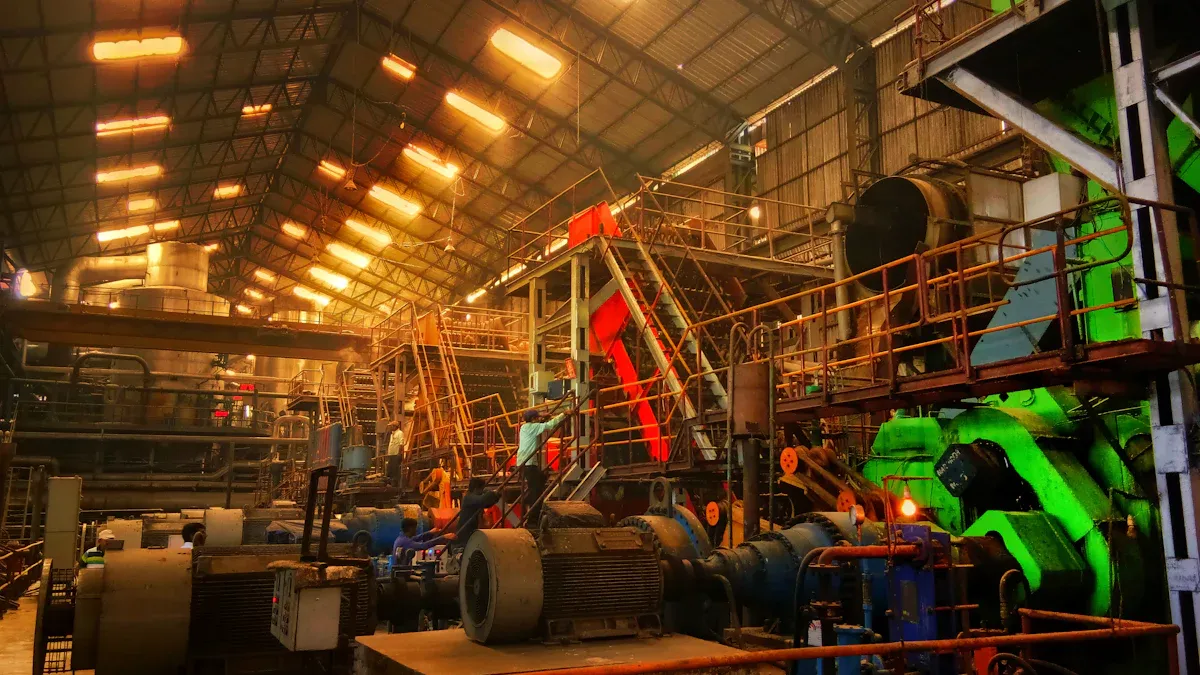
You see the mvr evaporator transforming operations across diverse application industries. This technology adapts to the unique demands of chemical, pharmaceutical, food, and wastewater sectors. The table below highlights the most prevalent application industries using mvr systems worldwide:
| Sector | Description |
|---|---|
| Food and Beverage | Utilizes MVR for efficient processing and concentration of products like juice and milk powder. |
| Pharmaceutical | Employs MVR for concentrating solutions and recovering solvents in drug manufacturing. |
| Chemical | Uses MVR for concentrating chemical products and treating hazardous wastewater. |
| Wastewater Treatment | Implements MVR to reduce wastewater volume and recover valuable resources from effluents. |
You rely on mvr technology to strengthen chemical solutions and achieve zero discharge in wastewater treatment. The mvr evaporator supports crystallization, producing pure solids from waste streams. You benefit from automation, steady operation, and lower costs. Plants report over 70% reduction in steam consumption, 60% less energy use, and 25% higher product recovery. You also see batch times shortened by 30% and ROI achieved within 18 months. Water recovery rates reach 95%, with annual energy savings exceeding $300,000.

You process heat-sensitive materials and demand high purity. The mvr evaporator enables gentle concentration and solvent recovery, preserving active ingredients. You meet strict quality standards while reducing energy costs. This application industry values automation and reliability, supporting continuous production and compliance.
You require efficient concentration and water conservation. The mvr evaporator operates at low temperatures, preserving flavors and nutrients in dairy, juices, and sauces. You achieve significant energy savings, lower operating costs, and improved product quality. Compact design allows you to scale operations easily, supporting both small and large facilities.
Tip: MVR systems help you conserve water by reusing almost all vapor produced during evaporation.
You face strict discharge regulations and sustainability goals. The mvr evaporator rapidly reduces wastewater volume and increases concentration rates. You recycle and reuse treated water, achieving zero discharge standards. Low power consumption and high efficiency support environmental compliance and cost savings. This application industry relies on mvr for reliable treatment and resource recovery.
You seek solutions that deliver clear advantages over traditional evaporation technologies. The mvr evaporator stands out for its energy efficiency and environmental benefits. You notice several competitive features when you compare mvr systems to older evaporator designs:
Energy efficient operation saves you money on utilities.
Compact footprint fits into limited spaces, reducing facility costs.
Reduced CO2 emissions help you meet sustainability targets.
Low long-term costs support your budget planning.
Stable operation ensures reliable performance with minimal downtime.
Automated controls simplify daily management and improve safety.
Simple structure allows for mild evaporation, protecting sensitive products.
Note: You can achieve significant energy savings because mvr does not emit waste heat or require a boiler. This technology minimizes the need for live steam and supports environmental protection goals.
You demand advanced features and continuous improvement from your suppliers. Over the past five years, mvr technology has evolved to meet your changing needs. Suppliers have introduced new designs and digital tools that enhance efficiency and reliability. The table below highlights recent innovations in mvr systems:
| Innovation Type | Description |
|---|---|
| Energy Efficiency | Improved heat transfer designs boost energy recovery and lower operational costs. |
| Material Selection | Corrosion-resistant alloys and high-performance polymers extend equipment lifespan. |
| Automation & Digitalization | Advanced process controls and predictive maintenance tools increase efficiency. |
| New Product Development | IoT-enabled mvr systems offer real-time monitoring and predictive maintenance. |
| Portable Systems | Compact mvr units serve small-scale operations in food and beverage production. |
| Corrosion-Resistant Systems | Titanium-clad heat exchangers support high-salinity processes like desalination. |
| Hybrid Systems | Combined mechanical and thermal compression meets variable operational demand. |
You benefit from these innovations by gaining access to reliable, efficient, and flexible mvr solutions. Suppliers continue to invest in research and development, ensuring that your evaporator system meets the highest standards for performance and sustainability.
You start your journey with mvr technology by working closely with suppliers. You share your demand for energy-efficient industrial solutions and outline your process requirements. Suppliers listen to your goals and analyze your feedstock, whether you handle wastewater or need advanced treatment for sensitive materials. You participate in pilot tests and site evaluations. These steps help you see how the mvr evaporator will perform in your facility. You receive tailored recommendations and technical support. This collaboration ensures you select the right system for your sustainable industrial processes.
Tip: Early engagement with suppliers helps you avoid costly mistakes and ensures your system matches your demand.
You rely on ongoing support after installation. Suppliers provide remote monitoring and predictive maintenance, keeping your mvr system running smoothly. You benefit from quick troubleshooting and regular updates. This support extends the lifespan of your equipment and maintains operational efficiency. You build strong relationships with your supplier, which leads to higher satisfaction and loyalty. The table below shows how post-sales support influences long-term success:
| Key Aspect | Impact on Long-term Success |
|---|---|
| Customer Relationships | Enhances loyalty and satisfaction |
| Operational Efficiency | Ensures smooth functioning of installations |
| Brand Loyalty | Fosters repeat business and stable revenue streams |
You see the value in reliable support, especially when your demand for consistent performance is high.
You want clear information about costs and savings. Suppliers provide detailed ROI calculators and transparent pricing. You compare electricity and steam costs, seeing how the mvr system reduces expenses. You track payback periods and long-term savings. This transparency helps you make informed decisions and plan your budget. You achieve faster returns and lower operational costs, supporting your demand for sustainable growth.
Note: Understanding your ROI helps you justify investments in advanced treatment technologies and strengthens your business case.
You see the mvr industry changing rapidly as sustainability becomes a top priority. Government agencies set strict targets for reducing greenhouse gas emissions. You notice new regulations that encourage companies to improve energy efficiency. Agencies like the EPA and the European Commission promote energy recovery technologies, including mvr. National trade ministries offer grants and low-interest loans to help you adopt sustainable evaporation systems. Companies invest in research and development for smart controls and eco-friendly materials. You respond to increasing environmental awareness by choosing mvr systems that lower your impact. These trends drive demand for advanced solutions in wastewater treatment, especially for high salt wastewater and high cod organic matter wastewater.
Government mandates push you to upgrade to energy-efficient systems.
Fiscal incentives make sustainable technology more affordable.
Regulatory frameworks encourage you to invest in mvr for wastewater management.
You meet your sustainability goals and improve your competitive position by adopting mvr technology.
You experience a shift toward digitalization in industrial evaporation. Smart controls and AI-powered monitoring systems help you optimize mvr performance. You track real-time data and adjust operations to maximize energy savings. Predictive maintenance tools alert you to potential issues before they cause downtime. You use digital dashboards to monitor wastewater treatment efficiency and resource recovery. These innovations make your processes more reliable and cost-effective.
AI integration boosts operational efficiency.
Digital tools support proactive maintenance and reduce unexpected costs.
Real-time monitoring helps you meet strict wastewater discharge standards.
You recognize the importance of circular economy principles in manufacturing. Mvr systems help you recover valuable resources from wastewater streams. You conserve water by concentrating waste and reusing process water. Energy efficiency improves your bottom line and supports climate change mitigation. Mvr technology enables zero liquid discharge facilities, maximizing water reuse and minimizing wastewater disposal.
| Contribution to Circular Economy and Zero-Waste Initiatives | Description |
|---|---|
| Resource Recovery | Mvr systems recover valuable resources from waste streams, promoting reuse and reducing waste generation. |
| Water Conservation | By concentrating waste streams, mvr enables the recovery of process water, significantly lowering water consumption. |
| Energy Efficiency | Mvr technology enhances energy efficiency, reducing reliance on fossil fuels and contributing to climate change mitigation. |
| Support for Zero Liquid Discharge (ZLD) Facilities | Mvr plays a crucial role in ZLD by maximizing water reuse and minimizing wastewater discharge, leading to economic and environmental benefits. |
You build a more sustainable operation and meet the demand for zero-waste manufacturing by integrating mvr into your wastewater treatment strategy.
You see mvr technology driving industry growth by connecting suppliers with your evolving demand for sustainability and cost-efficiency. The market focuses on energy recovery, modular systems, and smart controls. You benefit from innovations like advanced compressors and integration with renewable energy.
| Market Drivers | Description |
|---|---|
| Sustainability Push | Global initiatives encourage investment in energy-efficient solutions. |
| Regulatory Norms | Strict discharge rules promote adoption in water-intensive sectors. |
| Decarbonization | Funding supports circular economy models and advanced evaporation systems. |
You see the mvr evaporator market expanding due to rising energy costs, stricter environmental regulations, and the need for sustainable solutions. Many industries seek efficient evaporation systems to reduce operational expenses. You benefit from advanced technology that supports market growth and meets evolving industry standards.
You find the mvr evaporator market serving industries such as chemicals, food and beverage, pharmaceuticals, and wastewater treatment. These industries require reliable, energy-efficient systems. You gain advantages in cost savings, compliance, and product quality by adopting advanced evaporation technology.
You must comply with local and international regulations when selecting evaporation systems. Environmental regulations encourage you to choose energy-efficient solutions. The mvr evaporator market responds by offering systems that help you meet strict discharge and emissions standards, supporting your long-term sustainability goals.
You rely on smart mvr systems with automation capabilities to optimize performance and reduce manual intervention. These features help you monitor operations, predict maintenance needs, and improve efficiency. The mvr evaporator market continues to innovate, offering you greater control and reliability.
You support circular economy principles by using mvr evaporators to recover resources and minimize waste. The market provides solutions that help you reuse water, recover valuable materials, and reduce environmental impact. You contribute to a sustainable future by integrating these systems into your operations.
Tip: Stay updated on market trends to maximize your investment in advanced evaporation technology.

